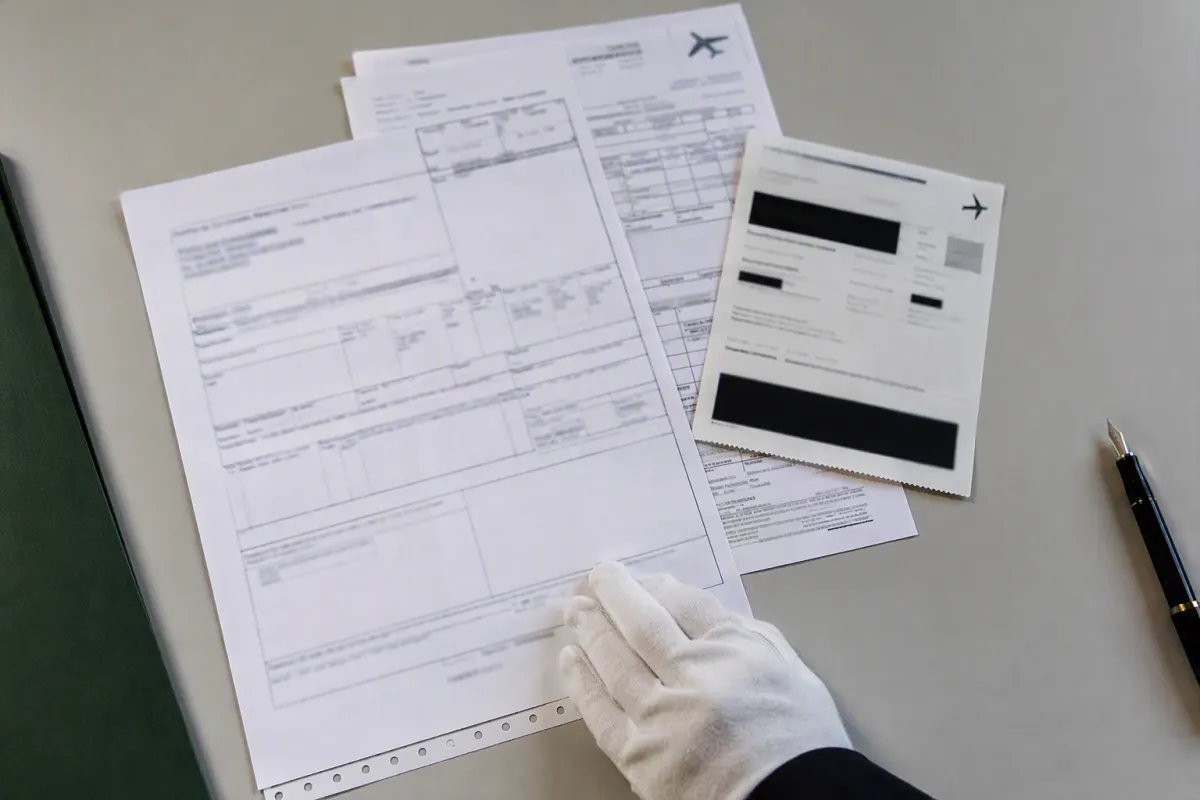


When a deceased person is repatriated from Germany, the authorities in the destination country almost always ask for a German death certificate they can accept as genuine. For most countries in Eastern Europe, the Caucasus and Central Asia, an apostille plus a certified translation is enough. For Uzbekistan and Tajikistan the apostille does not apply in relation to Germany — there, consular legalisation through the embassy is required.
Below we explain which version of the death certificate makes sense, who issues the apostille in Germany, what each destination country requires and in what order the steps are taken.
German or international death certificate?
The death certificate (Sterbeurkunde) is issued by the civil registry office (Standesamt) where the death occurred, once the death has been registered. Many registry offices also issue a multilingual (“international”) death certificate. The city of Munich, for example, charges €12 per certificate and usually registers a death within five working days once all documents are in.
The multilingual certificate is based on CIEC Convention No. 16 of 1976, in force for Germany since 1997. States bound by it must accept these extracts without legalisation or any equivalent formality. Among our clients’ destination countries, Türkiye and Moldova are parties. Russia, Ukraine, Kazakhstan and the Caucasus states are not.
Within the EU, Regulation (EU) 2016/1191 also applies: since 16 February 2019, public documents from one member state need no apostille in another, and a multilingual standard form can be attached as a translation aid. It does not help for countries outside the EU.
A practical tip: order several copies at once. One usually goes to the destination country with an apostille; others are needed in Germany for insurers, the pension fund, the bank and the estate.
What an apostille is and who issues it in Germany
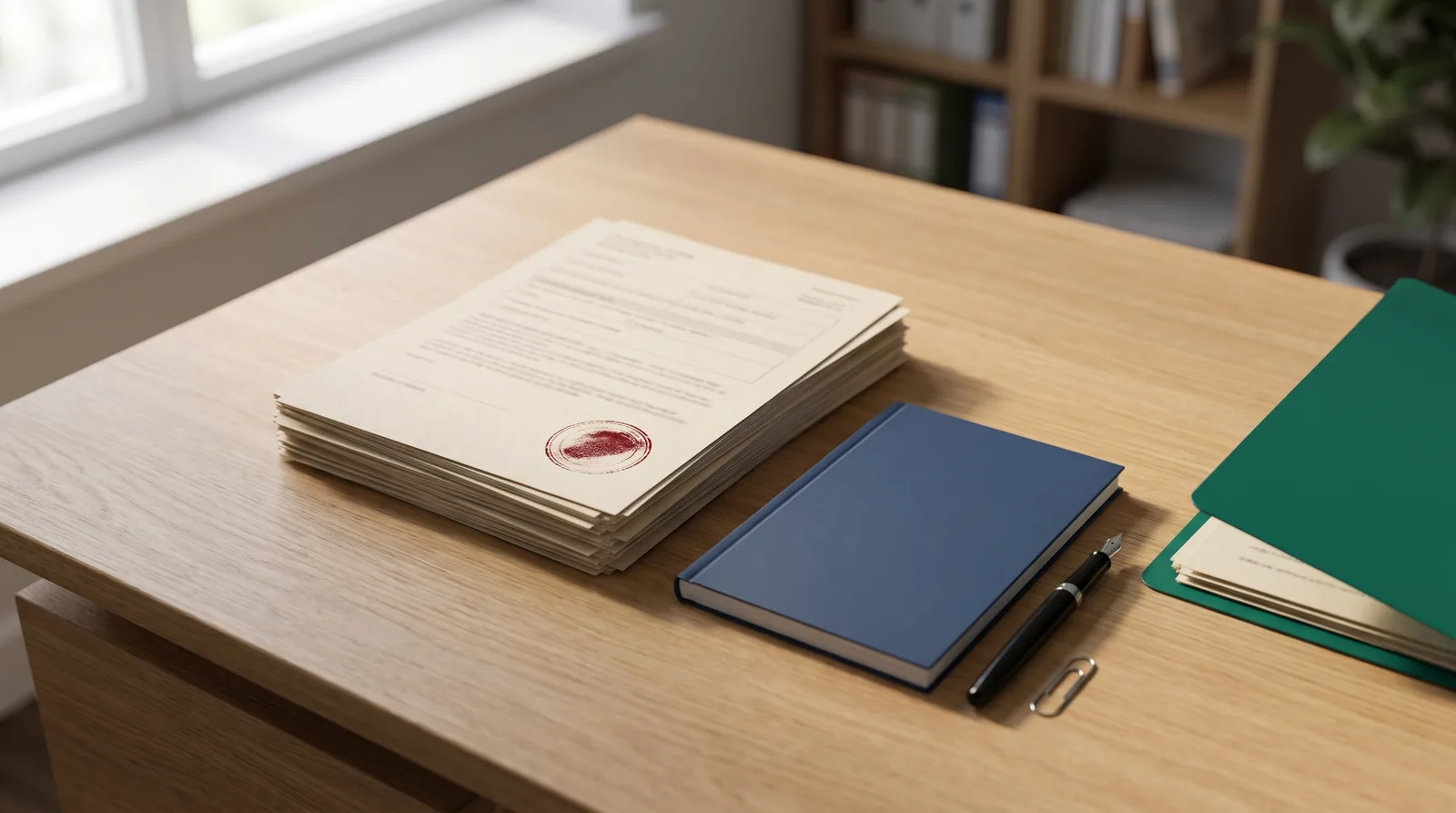
The apostille was introduced by the Hague Convention of 5 October 1961, in force for Germany since 1966. It confirms the authenticity of the signature and the authority of the issuing body — not the content of the document. Between contracting states it replaces the more complicated consular legalisation.
Who puts an apostille on a German death certificate depends on the federal state and on the authority that issued the document. The German Federal Foreign Office states explicitly that responsibilities vary from state to state. Some examples:
- Bavaria: for registry office documents, the government of the administrative district (Regierung) is responsible — for Munich, the Regierung von Oberbayern. The Regierung von Mittelfranken charges €20 per apostille and, for postal applications, advises allowing three weeks’ processing plus at least one week for post.
- North Rhine-Westphalia: apostilles for civil status documents are issued by the district governments (Bezirksregierung), for example the Bezirksregierung Düsseldorf for documents from its district.
- Court and notarial documents, translations: these are usually apostilled by the local or regional courts (Amtsgericht, Landgericht). In Bavaria, expect around €25 per document and two to three working days.
What each country requires
What matters is not only whether a state has joined the convention, but whether it applies in relation to Germany. Germany has objected to the accession of several states, and with them legalisation is still required. The table is based on the Federal Foreign Office list and the Hague Conference status table.
| Country | Apostille in relation to Germany | Notes |
|---|---|---|
| Russia | Yes | German documents generally have to be translated into Russian (see below). |
| Ukraine | Yes | Party to the convention since 2003. |
| Belarus | Yes | Party since 1992. |
| Moldova | Yes | Also a CIEC party: the multilingual death certificate must be accepted without legalisation. |
| Kazakhstan | Yes | Party since 2001. |
| Kyrgyzstan | Yes | Party since 2011. |
| Uzbekistan | No | German objection. Legalisation: German pre-authentication, then the Uzbek Consulate General in Frankfurt am Main, by post. |
| Tajikistan | No | German objection. Legalisation at the Embassy of Tajikistan in Berlin after German pre-authentication. |
| Georgia | Yes | Party since 2007. |
| Armenia | Yes | Party since 1994. |
| Azerbaijan | Yes, since 16 March 2026 | Previously legalisation. According to the German Embassy in Baku, now apostille only. |
| Türkiye | Yes | Also a CIEC party: multilingual death certificate without legalisation. |
Which translation, how many copies and which further papers the local authorities want varies from case to case. We clarify this before the repatriation with the consulate and our partners in the destination country. More on individual destinations: repatriation to Russia, to Uzbekistan and to Ukraine.
Legalisation: when the apostille does not apply
With legalisation, a consular officer of the destination country confirms that the German document is genuine. The process has several stages:
- Pre-authentication (Vorbeglaubigung): by the German authority that would otherwise issue the apostille, such as a district government or regional court.
- Final authentication (Endbeglaubigung): some states additionally require this. Since 1 January 2023 it has been handled by the Federal Office for Foreign Affairs (Bundesamt für Auswärtige Angelegenheiten).
- Legalisation: by the embassy or consulate of the destination country in Germany. The Uzbek Consulate General handles such applications by post only; according to its own information, the fee is €25–35 for Uzbek and €65–115 for German citizens.
Because several authorities work one after another, often by post, legalisation usually takes considerably longer than an apostille.
Translation by a sworn translator
German embassies and consulates do not produce translations. The Federal Foreign Office refers to publicly appointed and sworn translators in Germany. They are listed in the joint database of the state justice administrations, justiz-dolmetscher.de.
Taking Russia as an example, the German Embassy in Moscow describes two routes. Translation in Russia: Russian translators and notaries only accept the original if it carries an apostille. Translation in Germany: the translator’s certification then needs its own apostille. Either way, the key point is: the apostille goes on the original first, so that it is translated along with the document.
The right order
- Registration of the death at the registry office, with enough copies of the death certificate.
- Apostille — or, for Uzbekistan and Tajikistan, pre-authentication and legalisation.
- Translation of the certificate including the apostille, if the destination country requires it.
- Consulate of the destination country: permit or certificate for the repatriation.
Which documents are needed besides the death certificate is covered in “Which documents are needed for an international repatriation?”.
Where things get held up in practice
- Spelling of the name. If the name appears differently in the passport, death certificate and translation — “Jurij”, “Yuriy”, “Iurii” — consulates and authorities will ask questions. We match the transliteration to the passport before translation.
- Post. Written apostille applications can take several weeks. Applying in person, where possible, is often faster.
- Registration postponed. If the registry office is missing foreign birth or marriage certificates, there is no death certificate yet — and so no apostille.
- Wrong procedure. An apostille for Uzbekistan or Tajikistan does not help and only costs time.
Whether the repatriation itself has to wait for the apostille depends on what the destination country needs the certificate for: the consulate’s permit, or later for local authorities. We clarify this in advance. An international repatriation with us typically takes 3 to 7 working days. The authentications required are listed in our written fixed price, which you receive within a few hours — for costs in general, see “What a repatriation from Germany costs”.
Frequently asked questions
Call us — we take care of certificates and authentication
Tell us where the person died and to which country they are to be taken. We will establish whether an apostille or legalisation is needed, arrange translation and the consulate’s permit, and call you back within the next hour. Around the clock, in English, German, Russian and Ukrainian.
- Call back within one hour
- Written fixed price within a few hours
- Around the clock, in four languages
A first conversation costs nothing and commits you to nothing.
This article reflects the published regulations and does not replace legal advice. Responsibilities, fees and the requirements of destination countries can change and vary between federal states and authorities.