
When someone dies in Germany, a doctor first certifies the death, a funeral director then collects the deceased and handles the formalities, and the death is registered at the civil registry office (Standesamt). Burial or cremation may take place no earlier than 24 to 48 hours after death and, depending on the federal state, no later than 8 to 10 days (14 days in Rhineland-Palatinate). Coffins and urns must almost always be laid to rest in a cemetery. According to the consumer organisation Aeternitas, an average funeral costs €5,000 to €6,000 without a headstone.
This guide explains the process step by step, lists the deadlines in all 16 federal states, the usual types of burial and typical cost ranges, and what families can do if they cannot afford a funeral.
The process: first steps after a death
- Doctor and death certificate. A doctor examines the deceased and issues the medical death certificate (Todesbescheinigung). If the death occurs at home, call the family doctor or the out-of-hours medical service on 116 117, or 112 in an emergency. In a hospital or care home, the institution arranges this.
- Funeral director. The funeral director collects the deceased and takes them to a refrigerated room. The body may stay at home only briefly: in most states for no more than 36 hours, usually 24 hours in Brandenburg and Saxony, 48 hours in Thuringia.
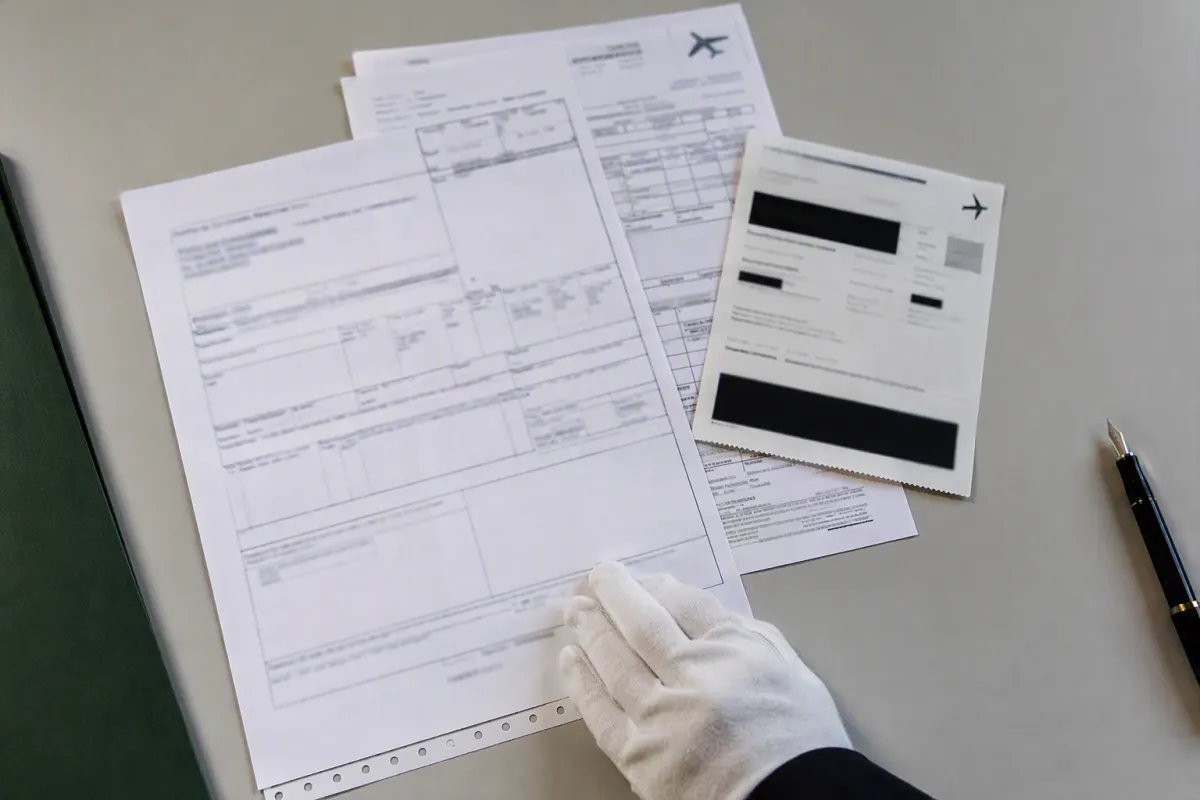
- Civil registry office. The death must be reported to the registry office where it occurred no later than the third working day after death (Section 28 of the Civil Status Act, PStG). The funeral director usually does this. You will need, among other things, an ID card or passport, a birth certificate and, if applicable, a marriage certificate; foreign documents may require a certified translation. The office issues the death certificate (Sterbeurkunde).
- For cremation: second examination. Before cremation, a second, officially appointed doctor examines the deceased again. This is required in almost all states and can take a few days.
- Cemetery, service, burial. The grave and date are agreed with the cemetery administration. The funeral service usually takes place in the cemetery chapel or in a church.
For what to do in the first hours, see What to do when someone dies.
How long until the funeral? Deadlines by federal state
Each federal state sets its own deadlines in its burial act. The clock starts at the time of death, not when you call the funeral director. In practice, the timing is often determined by available dates at the cemetery and crematorium and by the second examination.
| Federal state | Earliest burial | Latest burial or cremation |
|---|---|---|
| Baden-Württemberg | once the examination has ruled out apparent death | 96 hours, unless the body is kept in a mortuary |
| Bavaria | 48 hours | 8 days |
| Berlin | once the burial permit has been issued | burial usually 4 days after the coffin reaches the mortuary; urn within 6 months |
| Brandenburg | 48 hours | 10 days |
| Bremen | usually 48 hours | without an application, the authority arranges burial after 10 days |
| Hamburg | date set by the authority on application | 10 days (then the authority steps in); urn within one month |
| Hesse | 48 hours | 10 days |
| Mecklenburg-Western Pomerania | 24 hours | 10 days |
| Lower Saxony | 48 hours | 8 days |
| North Rhine-Westphalia | 24 hours | 10 days; urn within 6 weeks |
| Rhineland-Palatinate | 48 hours | 14 days |
| Saarland | 48 hours | 10 days; urn within 3 months |
| Saxony | 48 hours | 8 days; urn within 6 months |
| Saxony-Anhalt | after the second examination | 10 days; urn within 6 months |
| Schleswig-Holstein | 48 hours | 9 days; urn within 3 months |
| Thuringia | 48 hours | 10 days; urn within 6 months |
Compulsory cemetery burial: where coffins and urns go
Germany has compulsory cemetery burial (Friedhofszwang). Coffins and urns must be laid to rest in a cemetery; burial forests and urn churches also count as cemeteries in law. Taking an urn home is not permitted in 14 of the 16 federal states.
- Bremen has allowed ashes to be scattered on certain private land since 2015 – only with a permit, if the deceased last lived in Bremen and expressly wished it during their lifetime.
- Rhineland-Palatinate has allowed urns to be kept at home and ashes to be committed to rivers since October 2025, if the deceased last lived there and set out this wish in writing during their lifetime.
A grave in Germany is also not granted in perpetuity, but for a rest period set by the cemetery regulations. After that, the right of use can be extended; otherwise the grave is cleared.
Types of burial in Germany
- Burial in a coffin, in a row grave or a chosen plot. More under Burial.
- Cremation: after the crematorium, the urn is interred in an urn grave, an urn wall or a columbarium. See Cremation.
- Burial at sea: the urn is committed to the North Sea or Baltic Sea.
- Tree burial (Friedwald): the urn is buried at the roots of a tree in a designated burial forest.
- Anonymous burial: interment without a name in a communal field, at some cemeteries without relatives present. See Anonymous burial.
A comparison of all options is on Types of funeral.
How much does a funeral cost in Germany?
The figures below are general market values from published overviews by consumer and industry associations. They are not Ritual-Service24 prices. Actual costs depend heavily on location, cemetery and scope.
| Item | Typical range | Source |
|---|---|---|
| Funeral director services, cremation | approx. €3,200 – 6,000 | Federal Association of German Funeral Directors (BDB) |
| Funeral director services, burial | approx. €3,300 – 6,300 | BDB |
| Cemetery fees, urn grave | approx. €650 – 4,000 | BDB |
| Cemetery fees, coffin grave | approx. €1,300 – 5,200 | BDB |
| Third-party services | approx. €810 – 7,800 | BDB |
| Simple funeral in total | easily €3,000 – 5,000 | Verbraucherzentrale, 2026 |
| Average total without headstone | €5,000 – 6,000 | Aeternitas e. V. |
| Average with headstone and grave design | €7,000 – 8,000 | Aeternitas e. V. |
Cremation is usually cheaper, mainly because an urn grave is smaller and its fee lower. Under Section 1968 of the German Civil Code (BGB), the heir bears the costs. Who is obliged to arrange the funeral is set by state law, usually the closest relatives in a fixed order.
If there is no money: funeral costs under Section 74 SGB XII
A person who is obliged to arrange the funeral but cannot afford it can apply to the social welfare office (Sozialamt). Section 74 SGB XII provides that the necessary costs of a funeral are covered where the person obliged cannot reasonably be expected to bear them.
- Who applies: the person obliged to arrange the funeral, not the deceased. Their income and assets are assessed; the estate is taken into account.
- Where: the office that last paid social assistance to the deceased, otherwise the office where the death occurred (Section 98(3) SGB XII).
- What is covered: only a simple, locally customary and dignified funeral – no flight, no burial abroad.
- When: ideally before placing any orders. Applying afterwards is not ruled out, but is harder.
Refugees from Ukraine: anyone receiving basic income support (Bürgergeld) or social assistance, or on a low income, can apply like anyone else. Recipients of benefits under the Asylum Seekers’ Benefits Act (AsylbLG) are excluded from social assistance (Section 23(2) SGB XII); in that case the benefits authority decides case by case. For Ukrainians who arrived on or after 1 April 2025, legislation has been introduced to move them into that system. Check with the social welfare office before placing an order which office is responsible for you.
Alternative: repatriation to the home country
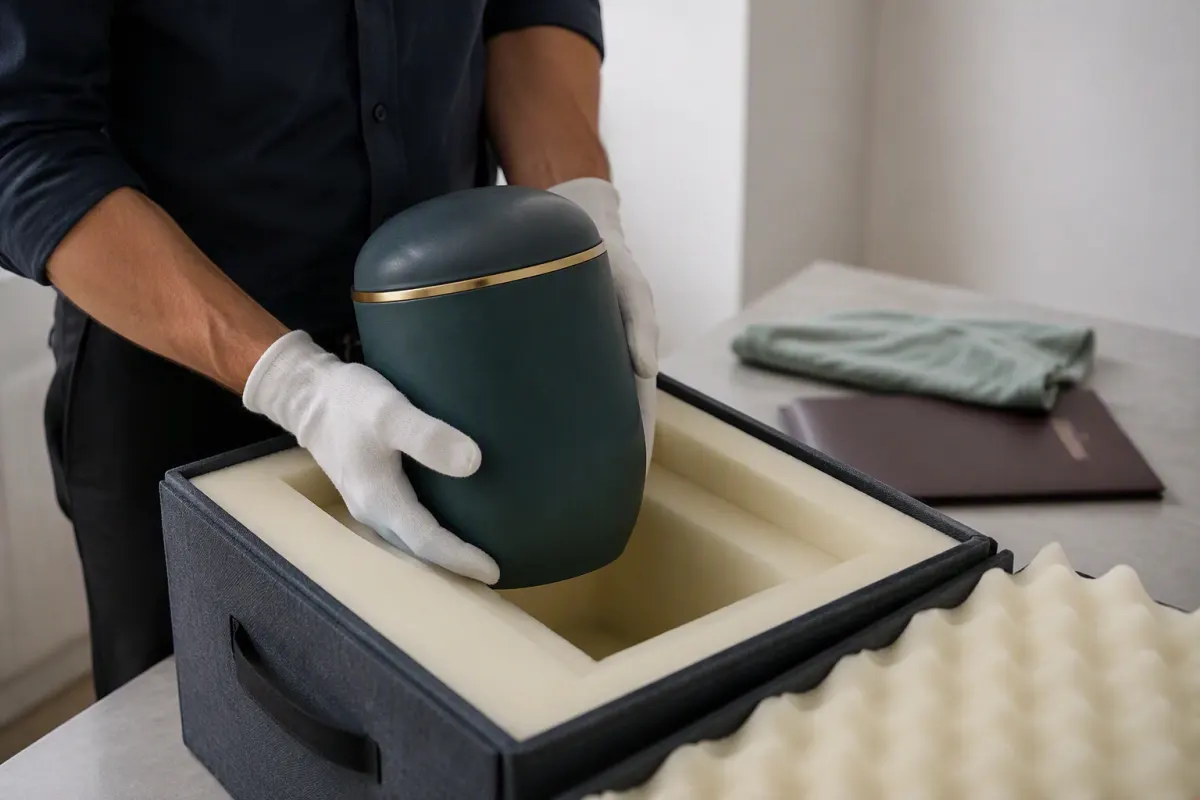
Many families prefer a burial in their home country rather than in Germany. This can be done in a coffin or, after cremation in Germany, as an urn. Because of compulsory cemetery burial, you cannot simply take the urn with you, and DHL has not shipped urns since 1 October 2025. The transfer is therefore arranged by a funeral director.
We carry out simple urn repatriations from €990; the guide price for Ukraine is €3,500 to €4,500. Cremation in Germany is not included. Details under Urn repatriation abroad, Repatriation to Ukraine and Repatriation costs.
Frequently asked questions
We can help – in four languages
Whether the funeral takes place in Germany or the deceased is repatriated, we can tell you which deadlines apply in your state, which documents are missing and what a repatriation would cost. Advice is available in English, German, Russian and Ukrainian, and you receive a written fixed price within a few hours.
Phone: +49 1511 7463888, 24/7 · Request a call-back
All information on deadlines and costs reflects published regulations and market overviews and is not legal advice. The burial act of your federal state and your cemetery’s regulations are binding.