
When someone dies far from home, the family is grieving and at the same time facing a procedure they have never had to think about. This article explains how repatriation of a deceased person to Ukraine from Germany and other European countries works: what it costs, which documents are needed, how long it takes and where delays usually arise. If you would rather talk, we are available around the clock in English, Ukrainian, Russian and German.
How it is done: by road
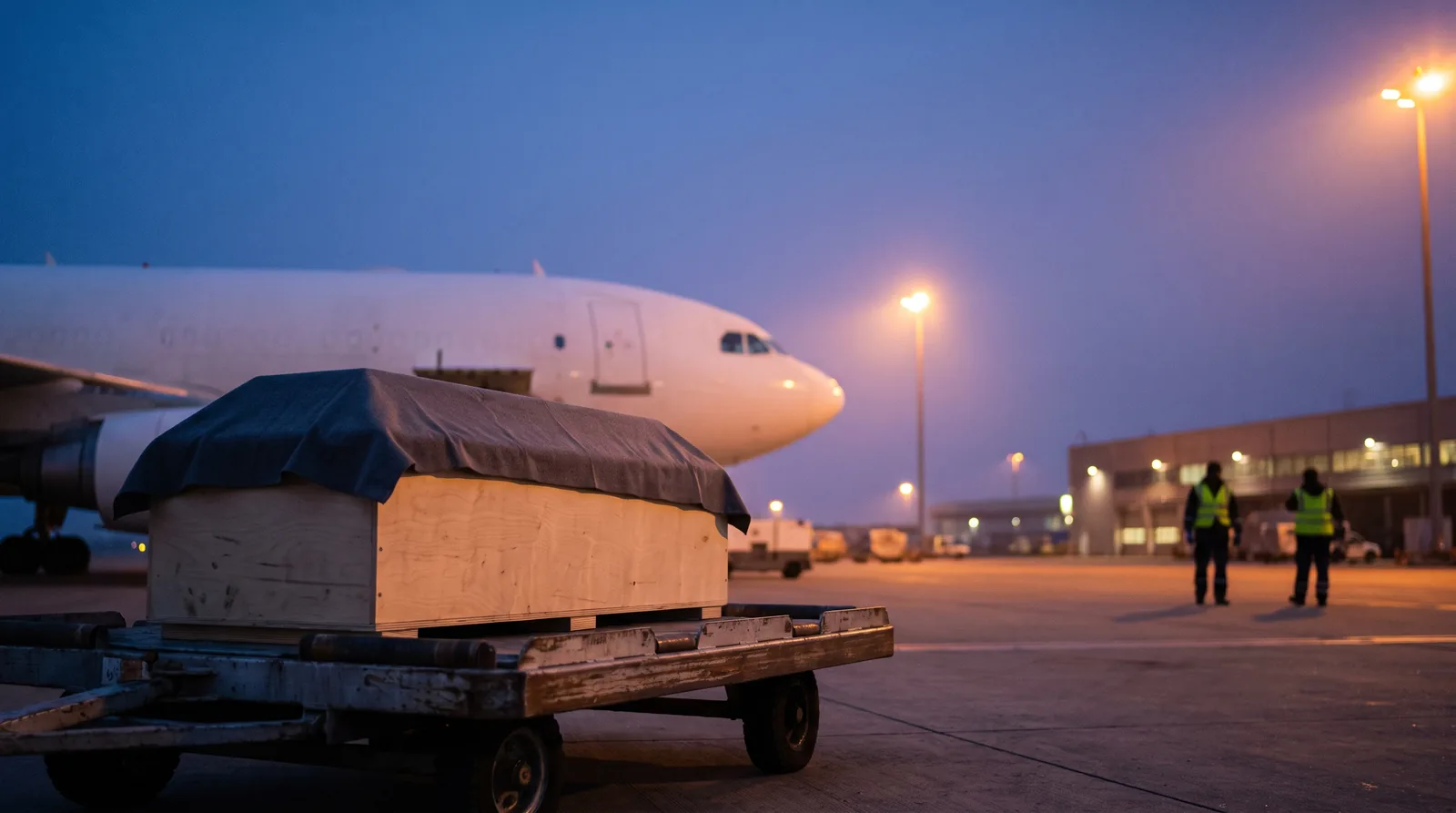
Within Europe, repatriations are often carried out by specialist vehicle. It is cheaper than air freight, avoids cargo terminals and transfers, and the handover date can be planned more precisely. As long as Ukrainian airspace remains closed there is no direct air freight, so we repatriate to Ukraine by road.
| Route | By road | By air freight |
|---|---|---|
| Germany → Ukraine | €3,500 – €8,500 | currently unavailable |
| Poland, Czechia, Slovakia, Hungary → Ukraine | quoted individually | currently unavailable |
| Austria → Ukraine | quoted individually | currently unavailable |
| Romania, Balkans → Ukraine | quoted individually | currently unavailable |
| Greece, Italy, Spain → Ukraine | quoted individually | currently unavailable |
Included in the fixed price: collection, hygienic care through our partners, coffin with zinc liner or urn container, all documents, consular certificates, customs clearance, the transport itself and handover to the funeral director in Ukraine. Burial on arrival is usually invoiced separately to the family by the local partner.
Which documents are required
- Death certificate from the country where the death occurred — for repatriation in the international multilingual format or with a certified translation
- Medical certificate of death
- Corpse passport (Leichenpass in Germany) — issued by the competent authority at the place of death
- Certificate of no objection from the public health office
- Sealing certificate for the zinc liner
- Passport of the deceased or a certified copy
- Release by the public prosecutor if the death has not been certified as natural
- Apostille and certified translations — depending on the country of departure
The order matters: the consulate usually only gives its consent once the death certificate and corpse passport are ready. Anyone who tries to run the steps in parallel rather than in sequence loses days.
For an urn the set is smaller: death certificate, the crematorium’s cremation certificate and confirmation that the urn contains the ashes of this person. An urn does not need a corpse passport.
Zinc-lined coffin: when it is required
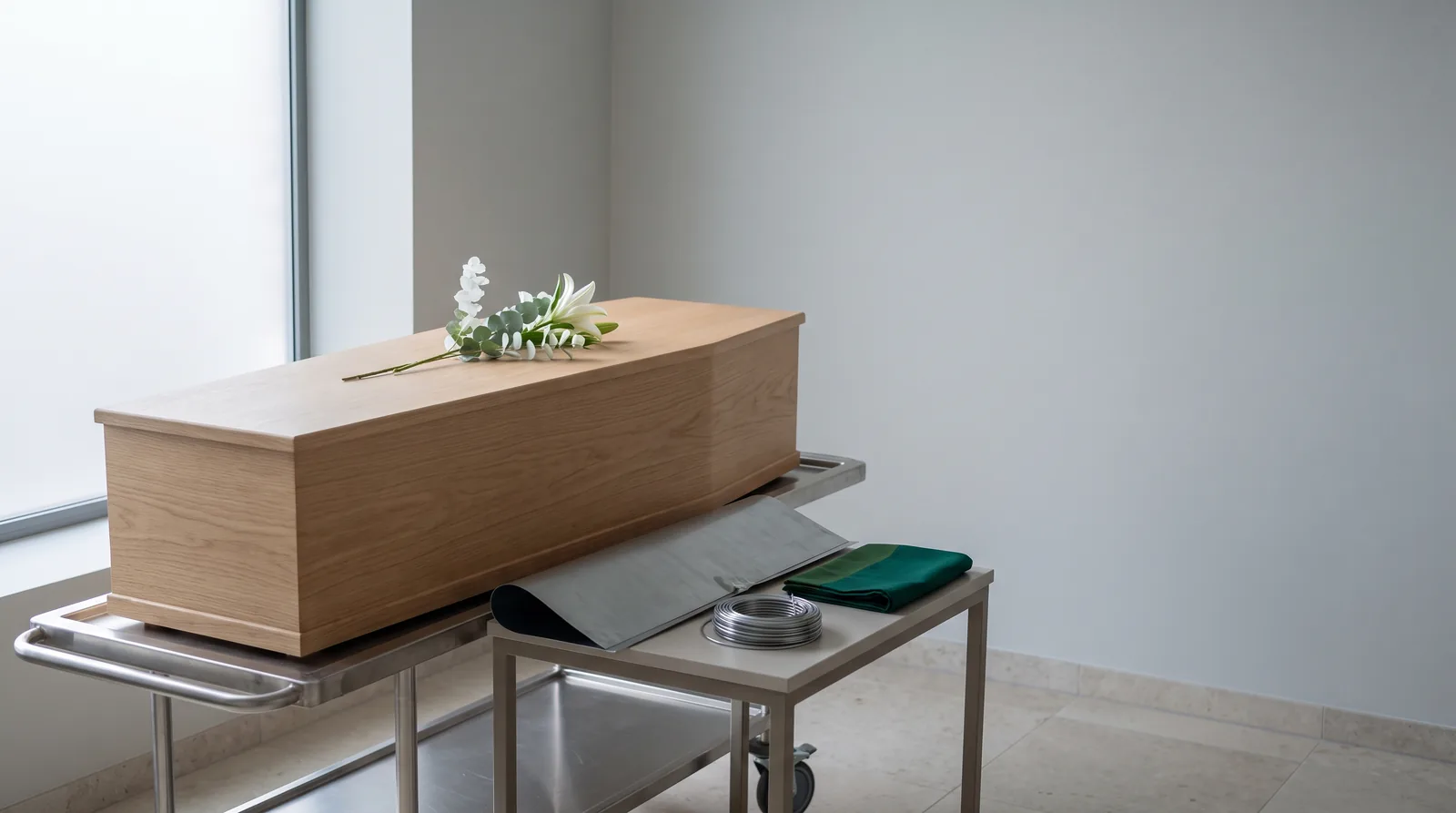
For the international transport of a body, a metal inner coffin is soldered airtight and placed inside a wooden coffin. It is the most expensive single item on the invoice — and the reason urn repatriation costs about half: the zinc, the soldering and most of the weight are not needed. When exactly it is required is explained in “Zinc-lined coffin for repatriation abroad”.
Worth knowing in advance: once the coffin has been soldered, a farewell at the open coffin is no longer possible. If the family would like to see the deceased one last time, tell us straight away — we schedule the farewell beforehand.
How long it takes
By road within Europe usually four to seven days — counted from the point at which all documents are in hand, not from the day of death.
Delays are almost never caused by the transport. They are caused by a missing release from the public prosecutor, a death certificate in the wrong format, a closed consulate or an uncertified translation. That is why we check the complete set of documents before booking transport.
If the death did not occur in Germany
The process is the same; only the names of the documents and the issuing authorities change. We work with local partners across Europe: they handle the paperwork on site, while we take care of the consular part, the transport and the handover in Ukraine. You have one contact and one invoice.
Families most often contact us from Germany, Austria, Poland, Czechia, Hungary, Romania, Italy, Greece and Spain. If your country is not listed, just ask — we will tell you honestly whether we can take it on.
Who pays
The consulates of Ukraine and Germany issue certificates and give advice, but do not cover repatriation costs. Check whether the deceased had insurance that includes repatriation: travel insurance often does, usually up to a fixed amount.
If there is no insurance and money is short, an application to the German social welfare office under § 74 SGB XII remains — usually the office at the place of death. It covers only part of the costs and neither the air fare nor the zinc-lined coffin, but it still helps. More in “Repatriation abroad and the social welfare office”.
Frequently asked questions
Call us — the conversation is free
The first conversation is free and non-binding. Tell us where the deceased is and where they need to be taken — we organise the rest. Available around the clock, including nights and weekends.
Phone: +49 1511 7463888 · Request a call back
This article reflects the published regulations and does not replace legal advice. The requirements of the competent authority and the destination country are binding.