
Cremation in Germany followed by repatriation of the urn is an option more and more families choose. The paperwork is simpler and it costs considerably less than repatriating a coffin. But Germany has strict rules on cremated remains, and it is worth knowing them before there are surprises at the cemetery or the airport.
Why the urn is not simply handed over
Germany has compulsory cemetery burial (Friedhofszwang): the deceased and their ashes must be interred in a cemetery or another officially approved place. Keeping an urn at home or scattering ashes in the garden is therefore not permitted in almost all federal states and counts as an administrative offence.
This shapes practice: crematoria do not hand urns over to just anyone. They release them, with the documents, to a funeral director, a cemetery or a carrier. The details depend on the federal state and the crematorium.

How the urn legally reaches another country
- Cremation in Germany. Beforehand, most federal states require a second official examination of the body. If the cause of death is unexplained, the public prosecutor’s release is needed first.
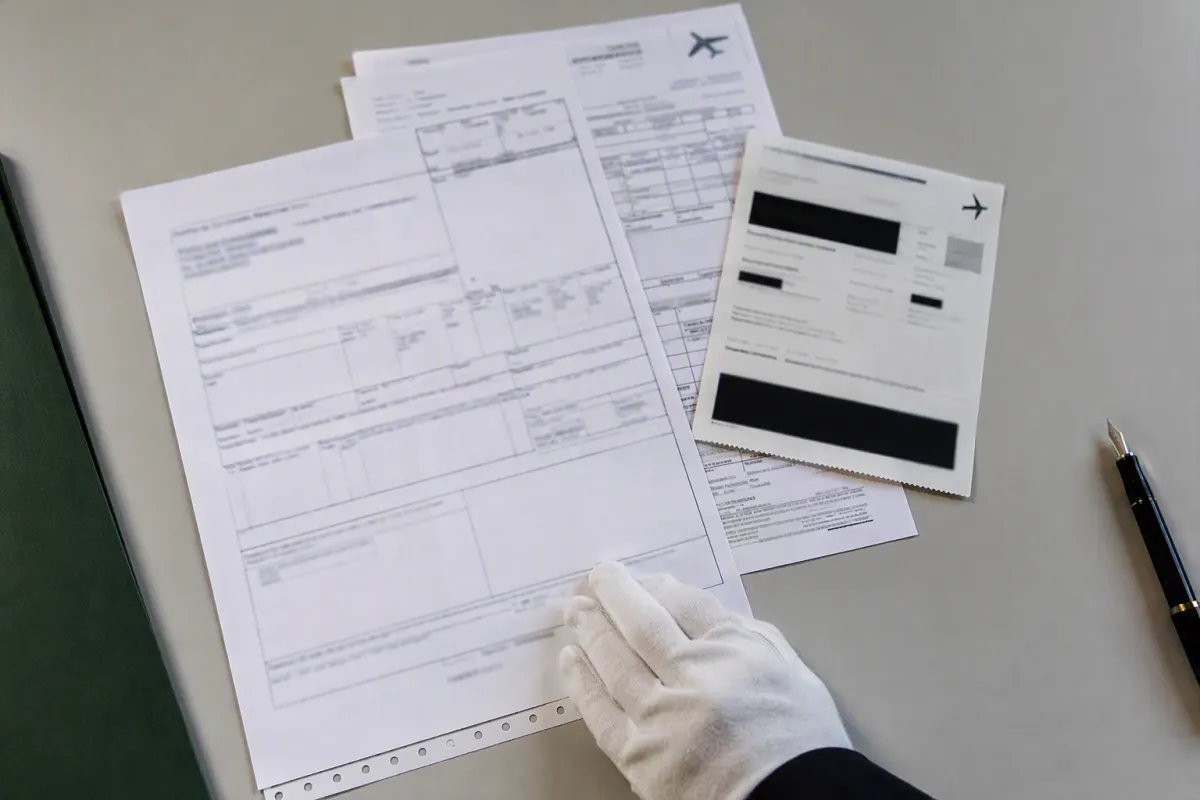
- Documents. We obtain the death certificate, the cremation certificate and everything the destination country’s consulate requires.
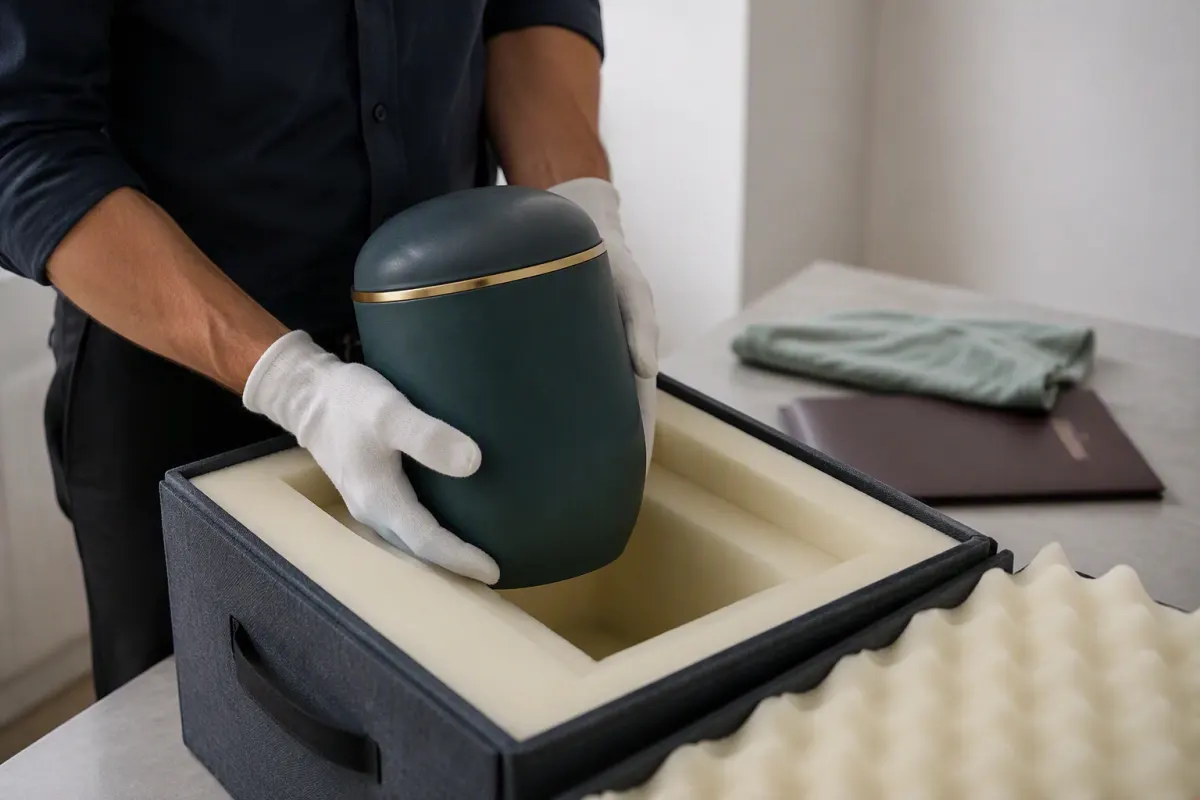
- Handover of the urn. The crematorium releases the urn to us. We transport it ourselves or hand it to a funeral director or cemetery in the destination country.
- Burial at home. Local rules apply there: where and how ashes may be interred is decided by the law of that country.
If an investigation into an unexplained death is under way, see “Why the body is not released”.
Which documents an urn needs
- death certificate;
- the crematorium’s cremation certificate;
- copy of the passport of the deceased;
- documents required by the destination country’s consulate — depending on the country with translation and apostille.
An urn does not need a corpse passport. That document is for transporting a body in a coffin. More on procedure and prices on our page on urn repatriation abroad.
Can the family take the urn on a flight themselves?
Many airlines allow urns in hand luggage, but the rules vary. The urn must be X-ray-able at the security check; a thick metal or stone urn can cause problems. Carry the death certificate and cremation certificate with you. Check the airline’s conditions before booking.
The real hurdle is not the airline but German practice on releasing urns. Whether the urn may be handed to a relative for transport in your particular case is something we clarify in advance with the crematorium and the authority. If not, we transport the urn. To Ukraine this is currently only possible by road, as there are no direct flights.
What it costs
Urn repatriation usually costs about half as much as repatriating a coffin. Cremation and documents are charged separately. Guide prices by destination are on the page repatriation costs.
A question of faith and tradition
Before choosing cremation, talk it through with the family. Cremation is not permitted in Islam or Judaism. The Orthodox churches regard it with reservation. If you are unsure, ask a member of the clergy before deciding: once cremation has taken place, the decision cannot be reversed.
Frequently asked questions
Call us — we help you choose
Tell us where the deceased is and where the urn is to go. We will explain which documents are needed and how the urn can legally reach its destination. Around the clock, in English, German, Russian and Ukrainian.
Phone: +49 1511 7463888 · Request a call back
This article reflects the published regulations and does not replace legal advice. The release of urns is regulated differently depending on the federal state, crematorium and destination country.