How does an international repatriation work?
Losing someone close is always painful. When there is also the wish to take the deceased abroad — or to bring them back to Germany from abroad — a great many organisational and legal questions arise.
An international repatriation is considerably more complex than a funeral at home. It calls for precise planning, cross-border coordination and compliance with each country’s rules. Below we explain step by step how it works and what deserves particular attention.

1. First contact and consultation
It begins with a personal conversation with Ritual-Service24. In it we establish:
- Which country is the destination?
- Is it to be a burial or a cremation?
- Are there religious or cultural considerations?
- Are there deadlines in the destination country?
At this stage we already check the legal requirements of the country concerned and set out the process, the timeframe and the costs transparently.
2. Assembling the required documents
An international repatriation requires a range of papers, usually including:
- Death certificate
- A medical certificate of death
- A certificate of no objection for the transport
- The deceased’s passport or identity card
- where applicable, international mortuary passport documents
Depending on the destination, additional documents may be needed, such as consular confirmations or certified translations. Many countries also require a mortuary passport authorisation.
We handle the liaison with authorities, registry offices, consulates and embassies for you.
3. Hygienic and legal preparation
A transport in a coffin is governed by international transport rules, based among other things on the Berlin Agreement, which sets the standards for cross-border transports of the deceased.
In practice this means:
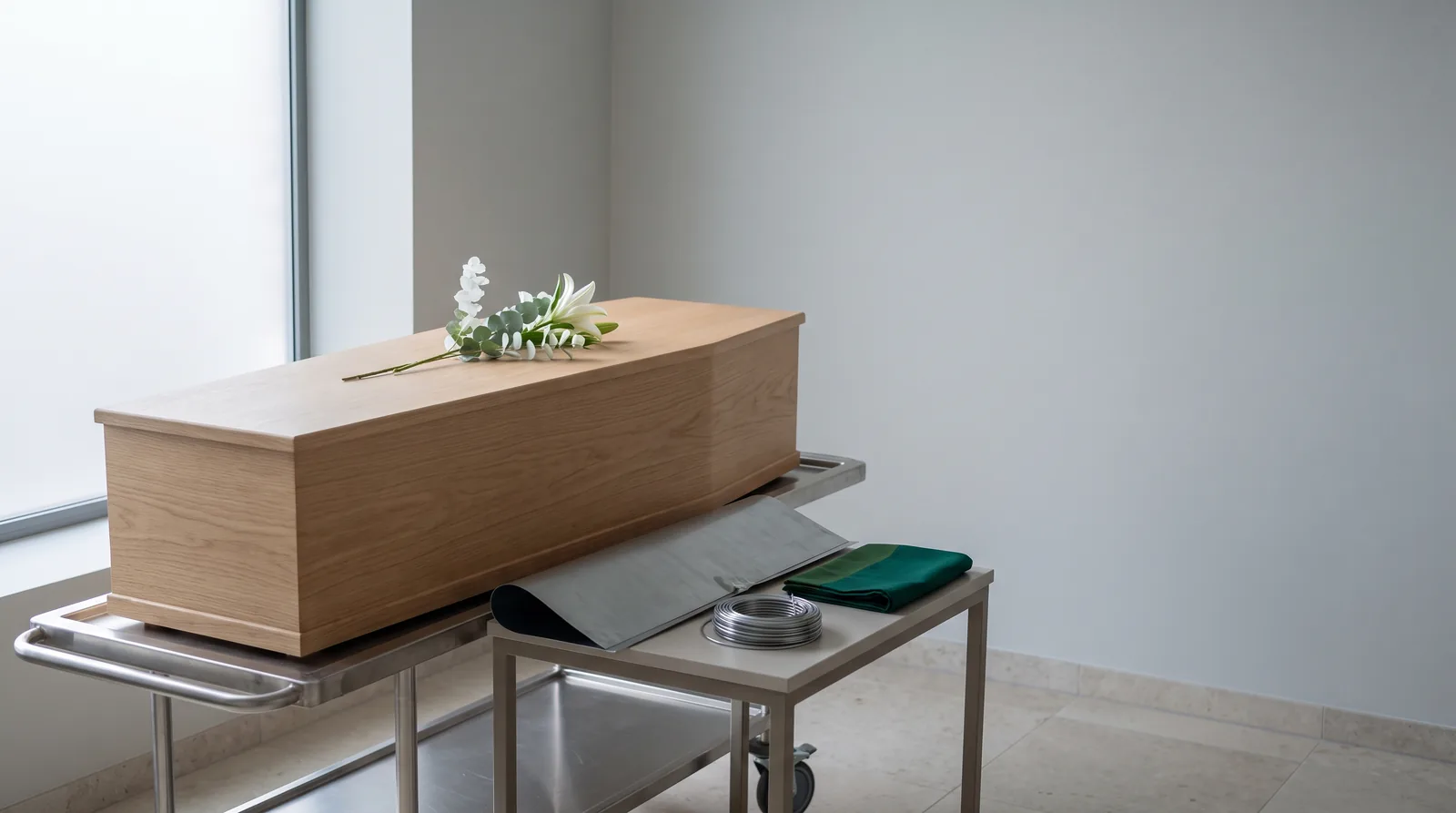
- the use of a special zinc coffin or an airtight soldered inner casket
- compliance with hygiene regulations
- official sealing
An urn transport is usually more straightforward, though country-specific rules apply here too, particularly in air travel.
4. Transport by air or by road
Depending on distance and destination, the transport goes:
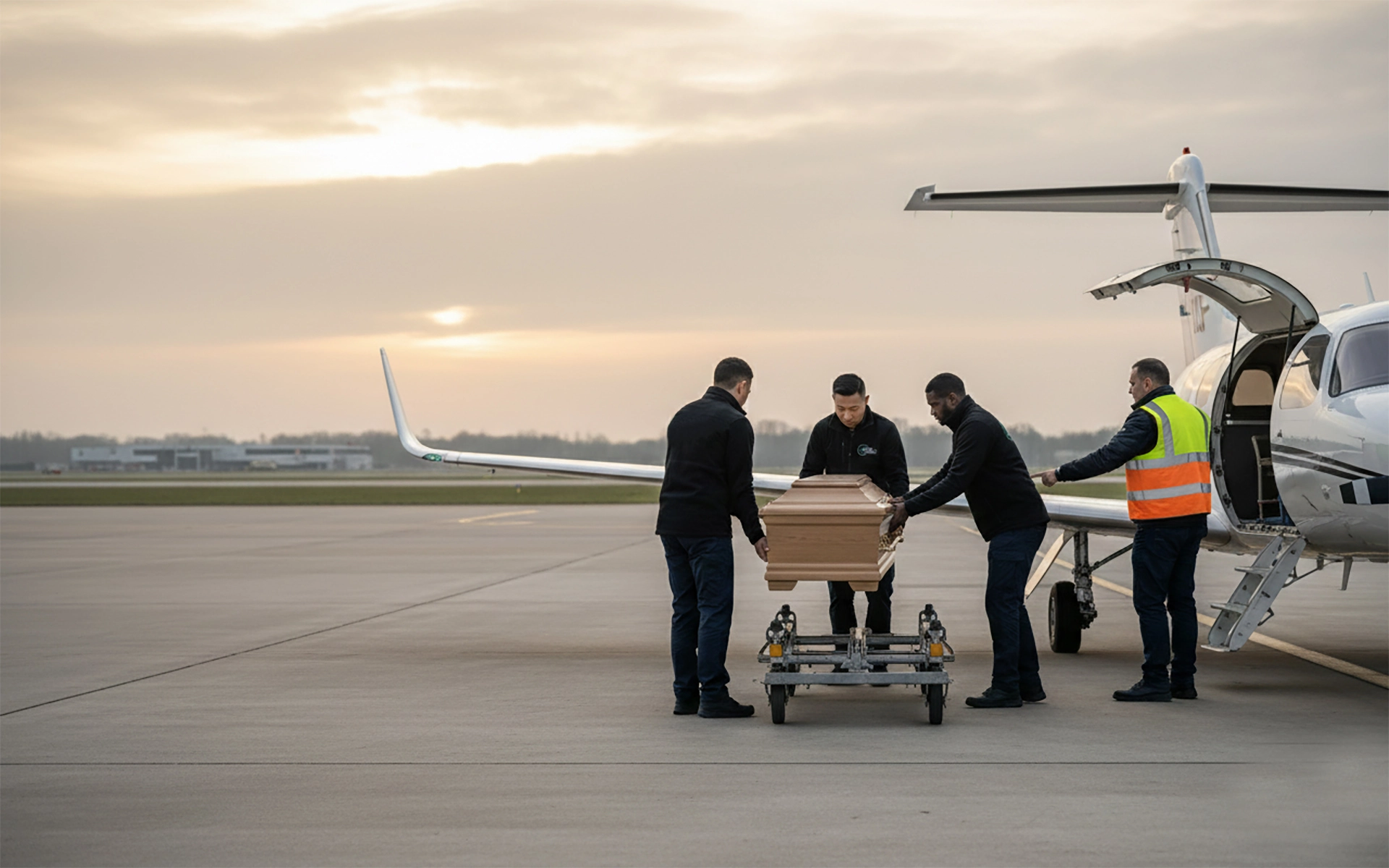
- by air, the most common option for international transports
- by funeral vehicle over land, within Europe
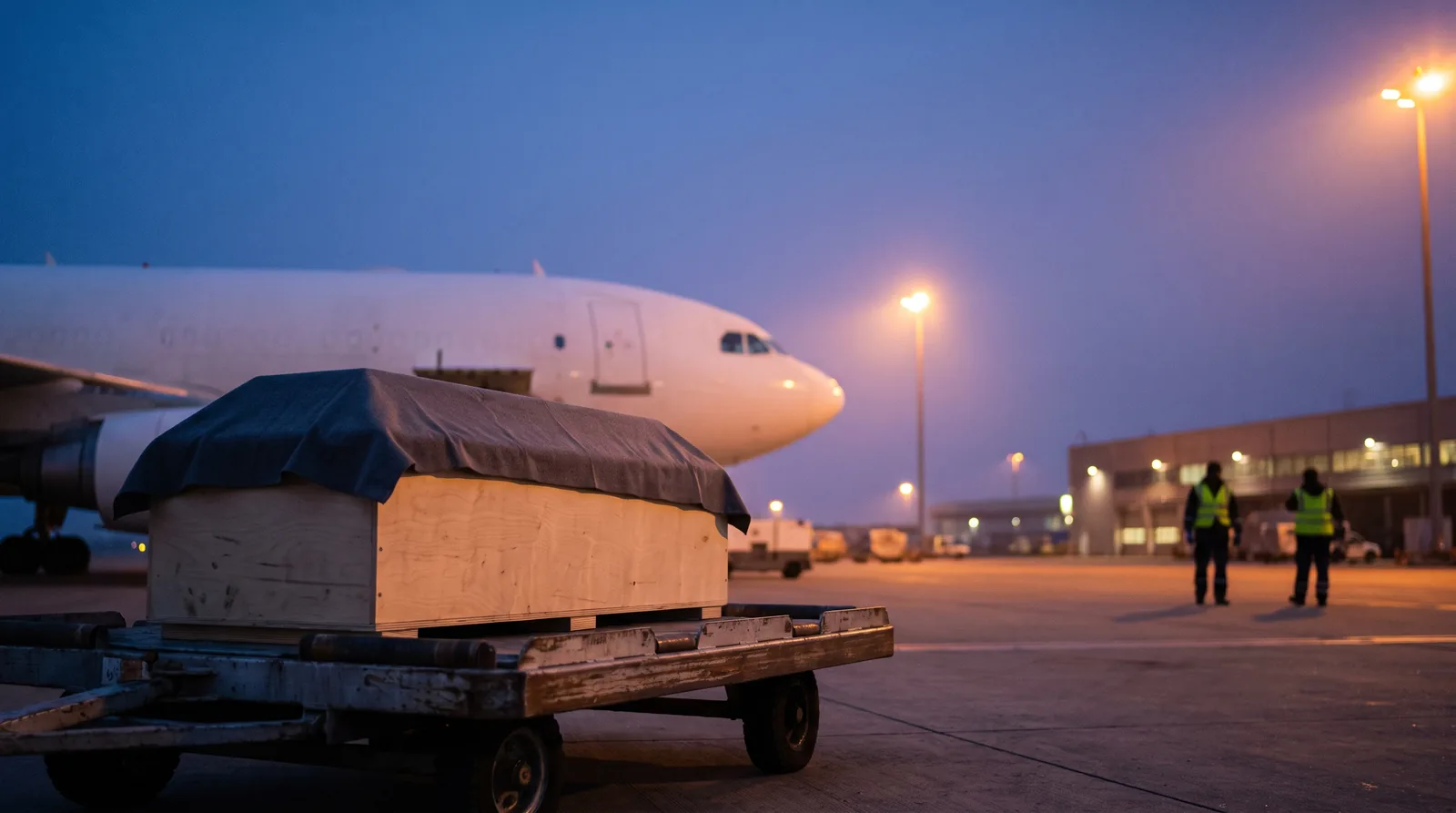
For air transports we coordinate with the airline, the freight terminal and the authorities. The transport is carried as air freight to international standards.
In the destination country we work with dependable partner funeral homes who take over the arrangements on the ground.
5. Arrival and handover
On arrival, the deceased is:
- received by the partner company
- taken to a funeral home or cemetery
- interred in accordance with local regulations
We coordinate every step in the background and remain your single point of contact throughout.
How long does an international repatriation take?
The duration depends on several factors:
- the destination country
- official processing times
- consular authorisations
- transport availability
As a rule an international repatriation takes between a few days and about two weeks. In individual cases, where administrative procedures are complicated, it can take longer.
What are the costs?
The cost is made up of several components:
- the coffin and the international transport fittings
- official fees
- consular fees
- the transport itself, by air or by road
- the services of the partner company abroad
Since every country has different requirements, we prepare a transparent, individual quote for you.
A special case: repatriation from abroad to Germany
If someone dies abroad, we also help bring them back to Germany. In that case the coordination involves:
- the local hospital or funeral director
- the German embassy or consulate
- the responsible authorities in the country concerned
Here too we take on the coordination in full.
What we aim for: certainty and structure in a difficult time
An international repatriation is organisationally demanding. That is why it matters so much for a family to have an experienced partner alongside them.
Ritual-Service24 takes on the entire planning, communication and execution — discreetly, respectfully and professionally.
That leaves you free to concentrate on what matters: a dignified farewell.