
A Muslim funeral is traditionally held as soon as possible – with ritual washing, a shroud and burial in the ground. This is possible in Germany, but minimum waiting periods, weekends and paperwork set limits. This guide explains what German law allows, how quickly repatriation to Turkey, Central Asia or the Caucasus realistically happens, and what families can do straight away.
What matters in a Muslim burial
The essentials are much the same in most Muslim families, whatever their country of origin:
- Prompt burial: the burial should take place without delay. People often speak of 24 hours; cemetery administrations in Germany give “ideally within 48 hours” as a guide.
- Ritual washing (ghusl): the deceased is washed according to fixed rules – women by women, men by men.
- Shroud (kafan): the body is then wrapped in white cloth.
- Funeral prayer: the prayer for the deceased (salat al-janazah) is usually held at the mosque or the cemetery.
- Earth burial facing Mecca: the grave is laid out so that the deceased faces Mecca.
- No cremation: cremation is not practised in Islam and is rejected by Muslim communities. We therefore do not offer it as an alternative to families who want an Islamic funeral.
A note on the washing: Ritual-Service24 does not carry out the ritual washing itself. We arrange it with local partners – the mosque community or a Muslim funeral director – and agree the time and place with the family. If relatives wish to be present or take part, it is best to tell us in the first conversation.
German burial deadlines and the need for haste
Burial law in Germany is set by the federal states. Almost everywhere there is a minimum waiting period after death before a burial may take place, so a same-day burial is usually not possible in Germany. Three examples:
| Federal state | Earliest earth burial |
|---|---|
| North Rhine-Westphalia | no earlier than 24 hours after death; the burial must take place within ten days |
| Bavaria | no earlier than 48 hours after death; the authority may permit an earlier burial |
| Berlin | once the burial permit (Bestattungsschein) has been issued |
These deadlines do not apply directly to repatriation abroad – there, documents and flights set the pace. More on that below.
Burial without a coffin: what the states allow
For a long time, a coffin was compulsory in Germany. Today almost all federal states allow burial in a shroud, usually for religious reasons. There is no legal entitlement, though: the cemetery operator decides, partly depending on the soil. Some examples:
| Federal state | Rule |
|---|---|
| Bavaria | since 1 April 2021 the cemetery operator may allow burial in a shroud without a coffin for religious or philosophical reasons. |
| Berlin | for religious reasons on designated burial fields; the body is carried to the grave in a coffin. |
| North Rhine-Westphalia | the statutory coffin requirement was removed; details are set by the cemetery by-laws. |
| Rhineland-Palatinate | new law since late September 2025: shroud burial is possible; without a religious reason only if the deceased requested it in writing; transport to the grave in a closed coffin. |
| Saxony-Anhalt | since September 2025: shroud burial for religious reasons, provided public interests do not stand in the way. |
| Saxony | a coffin is still required; in March 2026 the state government put forward an amendment with an exception for religious reasons. |
In practice, before the funeral it has to be confirmed that the chosen cemetery has a Muslim burial section and permits shroud burial.
Burial in Germany or repatriation home
Many cities now have Muslim burial sections, for example Berlin, Bremen and Cologne. But space is not sufficient everywhere: in 2023, Berlin had Muslim sections at six of around 220 cemeteries, and five of them were full.
There is also a question of faith. In Islamic understanding a grave should remain permanently. German cemeteries grant graves for a rest period, usually 15 to 25 years by law, after which the plot can be reused. This is one reason why many families – especially the older generation – choose repatriation. Younger Muslims born in Germany more often choose a grave here.
We have separate pages for the most common destinations: repatriation to Turkey, repatriation to Azerbaijan and repatriation to Uzbekistan. For Chechnya and Dagestan the import rules of the Russian Federation apply; see repatriation to Russia.
One point often surprises families: for the flight, the deceased needs a closed coffin, usually a sealed zinc-lined coffin. This does not conflict with shroud burial – the deceased lies in the coffin wrapped in the kafan and is buried at the destination according to local custom. More in our guide “Zinc-lined coffin for repatriation abroad”.
How quickly repatriation realistically happens
With us, repatriation abroad typically takes 3 to 7 working days. In Germany the deceased is usually collected on the same day. After that, the pace depends on steps no one can shortcut:
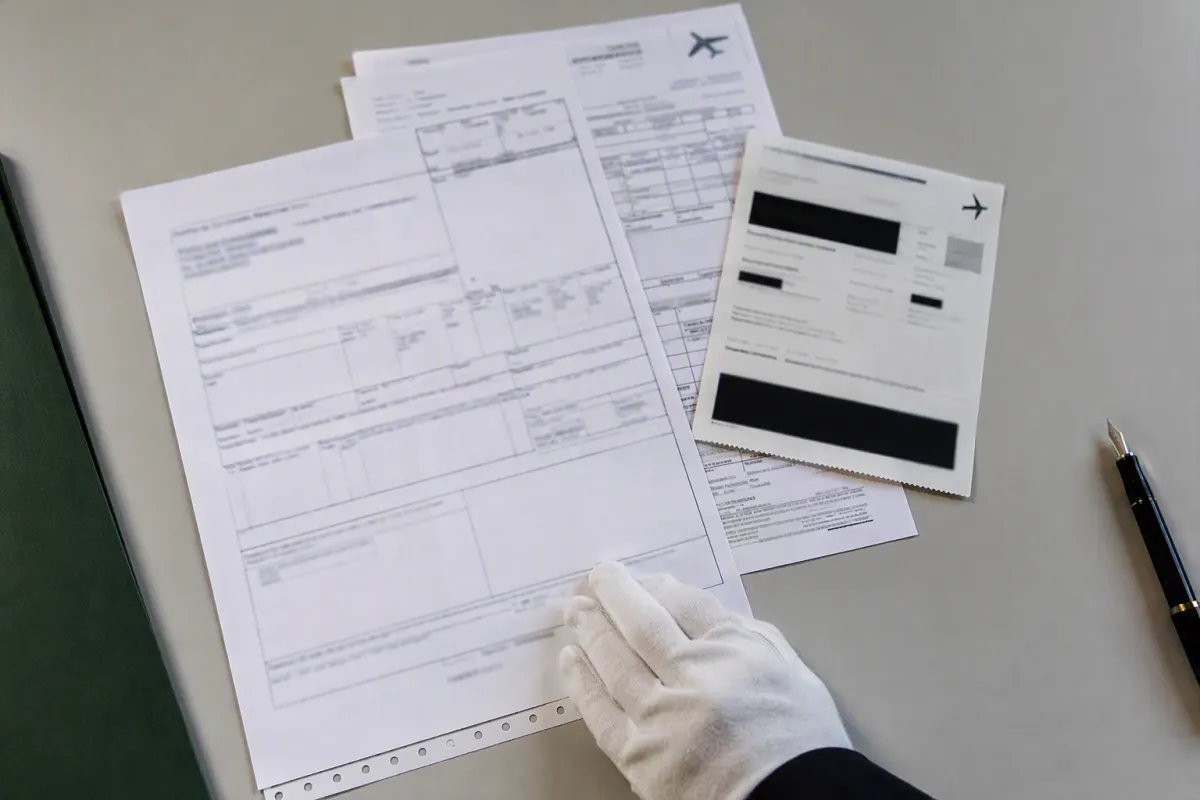
- Registry office (Standesamt): the death must be registered before the death certificate and the corpse passport (Leichenpass) are issued. Many registry offices work on weekdays only – after a death on a Friday evening, things often move on only on Monday.
- Public prosecutor: if the death was not natural or the cause is unclear, the public prosecutor must release the body, sometimes after a post-mortem. More: “Why the body is not released”.
- Corpse passport and consulate: first the German corpse passport is issued, then the consulate of the destination country gives its approval.
- Flight: air cargo needs a booking and available capacity on the route.
Muslim families understandably ask whether it can be faster. If all documents are ready early, we gain time – but no one can guarantee a particular day. We will tell you honestly what is realistic.
Funeral funds: what they cover and what to watch
Many Muslim families in Germany are members of a funeral fund (in Turkish, “Cenaze Fonu”). One widely used fund is that of DITIB, founded in 1992; it runs a 24-hour line for reporting a death. Other associations have funds too, for example the ATF Cenaze Nakil Yardımlaşma Fonu.
Depending on their rules, such funds cover things like paperwork, washing, placing in the coffin, transport to Turkey and a flight ticket for one accompanying person. Two points matter:
- Contact the fund first. Some funds only use their own contracted funeral directors and will not pay if the family has instructed another firm itself.
- Cover is limited. Full cover often applies only to repatriation to Turkey or burial in Germany. There are waiting periods after joining, and some rules expressly exclude any legal entitlement.
If the deceased was not a member, or the destination is another country, we take over the arrangements and give you a written fixed price in advance.
What families can do straight away
- Call a doctor if the death occurred at home; in a hospital or care home, staff will do this.
- Check for fund membership – find the membership number or papers and call the fund first.
- Gather documents: passport or ID card, birth certificate, marriage certificate if married, residence permit where relevant.
- Inform the mosque community if the funeral prayer is to be held in Germany.
- Decide where the burial will be – in Germany or in the home country. Everything else depends on this.
- Call us. We coordinate collection, the washing with our partners, the documents and the repatriation.
Frequently asked questions
Call us – we coordinate with the mosque and the authorities
Tell us where the person died and where they are to be buried. We arrange the washing with our partners, compile the documents and give you a written fixed price within a few hours. More than 20 years of experience, repatriations to over 30 countries, around the clock – in English, German, Russian and Ukrainian.
- Call back within one hour
- Written fixed price within a few hours
- Around the clock, in four languages
A first conversation costs nothing and commits you to nothing.
This article reflects the published regulations and does not replace legal advice. Burial law in Germany is set by the federal states; cemetery by-laws and the rules of destination countries may change.