
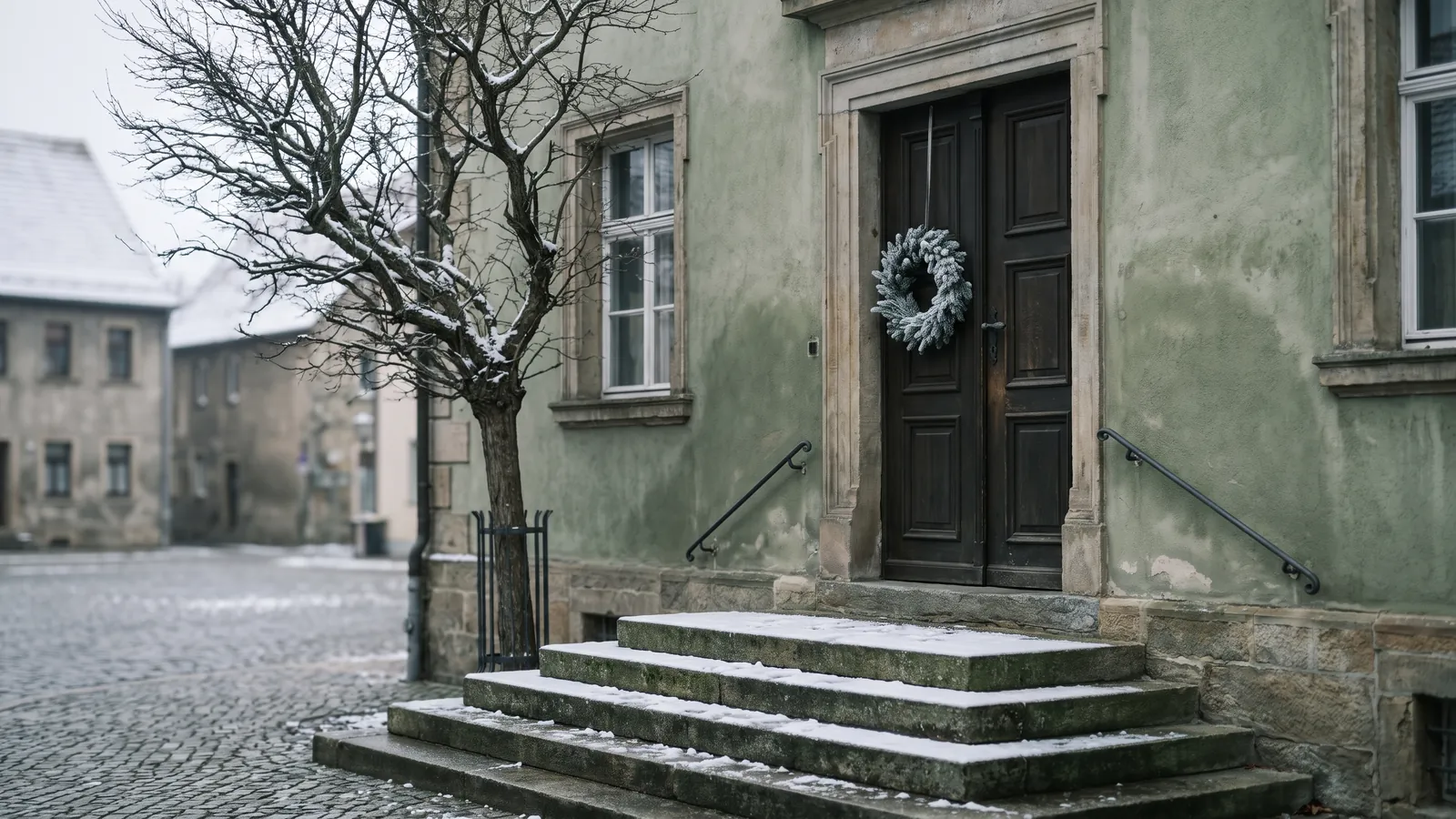
Between mid-November and mid-January, repatriating a deceased person from Germany often takes a few days longer. Register offices, public health offices and consulates close on public holidays, and in Germany many offices also close in the days between Christmas and New Year. In Russia, public authorities are off from 31 December 2026 to 10 January 2027. Burial deadlines in Germany keep running regardless. Families who gather documents early and stay reachable can win back the days the calendar costs.
Why the holidays slow down a repatriation
Every repatriation depends on a chain of official steps. First, the register office (Standesamt) registers the death. German civil status law requires the death to be reported no later than the third working day after the death (Section 28 PStG). Sundays and public holidays are not working days, so the deadline moves — but so does the office’s work.
Without registration there is no death certificate; without a death certificate there is usually no corpse passport (Leichenpass); and without both there is no consular approval. If a single step falls on a holiday, everything after it moves too. The full process is described in “How does an international repatriation work?”.
German authorities over Christmas and New Year
In 2026 the holidays fall awkwardly. 25 December is a Friday, 26 December a Saturday, followed by Sunday. New Year’s Day is a Friday, followed by another weekend. Between the two blocks there are only four working days, 28 to 31 December.
These are exactly the days on which some municipalities close their offices. Two examples from last winter: the register office in Darmstadt was closed from 29 December 2025 to 2 January 2026, with an emergency service only on 30 December for registering deaths and issuing corpse passports. The town of Nittenau in Bavaria closed its town hall from 23 December 2024 to 1 January 2025 and gave funeral directors a phone number for urgent cases. Every municipality handles this differently.
Regional holidays come on top: the Day of Repentance and Prayer (Buß- und Bettag) on 18 November 2026 in Saxony, and Epiphany on 6 January 2027 in Baden-Württemberg, Bavaria and Saxony-Anhalt. All Saints’ Day falls on a Sunday in 2026.
Public holidays in the destination countries
Russia. Under Government Resolution No. 1187 of 17 September 2026, 31 December 2026 to 10 January 2027 are non-working days — eleven days in a row, including Orthodox Christmas on 7 January. If documents are needed from Russia during this period, for example from relatives or a confirmation from the cemetery, expect to wait. More on the page “Repatriation to Russia”.
Ukraine. Since a change in the law in July 2023, Ukraine celebrates Christmas on 25 December; 7 January is no longer a public holiday. As long as martial law is in force, public holidays there are not additional days off anyway, because the relevant article of the Labour Code does not apply.
Kazakhstan. New Year is celebrated on 1 and 2 January. As 2 January 2027 is a Saturday, press reports say the day off moves to Monday, 4 January. 7 January, Orthodox Christmas, is a non-working day.
Countries in the Caucasus and Central Asia also have their own holidays in early January. Consulates in Germany set their own closing days; expect closures around New Year and Orthodox Christmas. We check the dates for each country in advance.
Key dates from November 2026 to January 2027 at a glance:
| Date | Occasion | Where | What it means |
|---|---|---|---|
| Wed, 18 Nov 2026 | Day of Repentance and Prayer | Saxony | Offices in Saxony closed |
| Thu, 24 Dec 2026 | Christmas Eve (not a public holiday) | Germany | Opening hours vary by municipality |
| Fri–Sun, 25–27 Dec 2026 | Christmas and weekend | Germany; Ukraine (25 Dec) | Three days without office hours |
| Mon–Thu, 28–31 Dec 2026 | “Between the years” | Germany | Some register offices closed, some with emergency service |
| 31 Dec 2026 – 10 Jan 2027 | New Year holidays | Russia | Eleven non-working days in a row |
| Fri, 1 Jan 2027 | New Year’s Day | Germany, Ukraine, Kazakhstan, Russia | Offices closed |
| Mon, 4 Jan 2027 | Transferred New Year day off | Kazakhstan | Non-working day |
| Wed, 6 Jan 2027 | Epiphany | Baden-Württemberg, Bavaria, Saxony-Anhalt | Offices there closed |
| Thu, 7 Jan 2027 | Orthodox Christmas | Russia, Kazakhstan | Non-working day; no longer a holiday in Ukraine since 2023 |
| from Mon, 11 Jan 2027 | — | all countries listed | Normal operations |
Deadlines in Germany keep running
How long a deceased person may be kept before burial or transfer is set by each federal state. In North Rhine-Westphalia, burial or cremation must take place within ten days. In Bavaria, since 2021, the deceased must be buried, cremated or on the way to transfer no later than eight days after death was established. More examples in “Funerals in Germany: process, deadlines and costs”.
Holidays do not pause these deadlines automatically. Whether Sundays and holidays count is a matter of state law. If time runs short, the deadline can be extended: in North Rhine-Westphalia the local public order office decides on the relatives’ application; in Bavaria the municipality can grant exceptions. We submit this application for you.
Until the transfer, the deceased must be kept refrigerated — in winter too. Cold weather outside is no substitute for proper cooling. If the public prosecutor is involved, their procedures add time; see “Why the body is not released”.
Air and road transport in winter
A coffin travels by air as cargo. The space must be confirmed by the airline, and around the holidays many routes are heavily booked. We therefore plan with more lead time during this period and only book once all permits are in place.
For road transport, weather and road conditions play a part. In Germany, vehicles may only be driven in black ice, snow or slush with winter tyres (Section 2(3a) StVO); other countries have their own rules. Snow, ice and waiting times at border crossings can add hours or a day to the journey. That is the transport company’s responsibility — for you it mainly means not setting dates in the destination country too tightly.
What families can do now
- Gather documents early. The deceased’s passport or ID card, birth certificate and, where relevant, marriage or divorce certificate. Foreign documents often need a translation. The full list is in “Which documents are needed for an international repatriation?”.
- Appoint one person with power of attorney. A written authorisation with a copy of their ID allows one person to sign and receive information on behalf of the family — even if other relatives are travelling over the holidays.
- Stay reachable. Name one contact person with a phone number that is answered on holidays too. Queries from offices or consulates often need an answer the same day.
- Clarify the destination. Which cemetery, who will receive the deceased in the destination country, and can that person be reached over the holidays?
- Set dates with care. Invite mourners only once the arrival date has been confirmed.
How we work over the holidays
We are available around the clock — on public holidays too. You will receive a written fixed price within a few hours, and we find out which offices and consulates are working on the days that matter.
A repatriation abroad typically takes 3–7 working days. Working days means that holidays in Germany and in the destination country are added on top. We arrange hygienic care of the deceased through partners on site. We repatriate in both directions — from Germany abroad and from abroad to Germany.
Frequently asked questions
Call us — we plan around the holidays
Tell us where the person died and where they are to be taken. We check which offices and consulates are working in the coming days, compile the documents and give you a realistic date. In English, German, Russian and Ukrainian.
- Call back within one hour
- Written fixed price within a few hours
- Around the clock, in four languages
A first conversation costs nothing and commits you to nothing.
This article reflects the published regulations and does not replace legal advice. Public holidays, office hours and deadlines may change and vary between federal states and destination countries.