
Burial types
Sea burial
Interment of the urn in the North or Baltic Sea, accompanied or unattended. A form of cremation — without a grave and without upkeep.
At a glance
Sea burial in brief
What the law requires and what that means for the family.
Only ashes in an urn may be interred at sea
An urn that dissolves in water is mandatory
North and Baltic Sea beyond the three-mile zone — inland waters are excluded
No closer to shore than this does the area begin in which interment is allowed. Only designated sea areas of the North and Baltic Sea are permitted — rivers and inland lakes are excluded.
Rhineland-Palatinate is the only federal state that additionally permits certain inland waters.
Process
How it works
Several weeks usually pass between the cremation and the interment.
Cremation
A sea burial presupposes a cremation. In most federal states the second examination is required beforehand.
Approval and shipping company
We register the interment with the shipping company and, where necessary, obtain exemption from compulsory cemetery burial.
Interment at sea
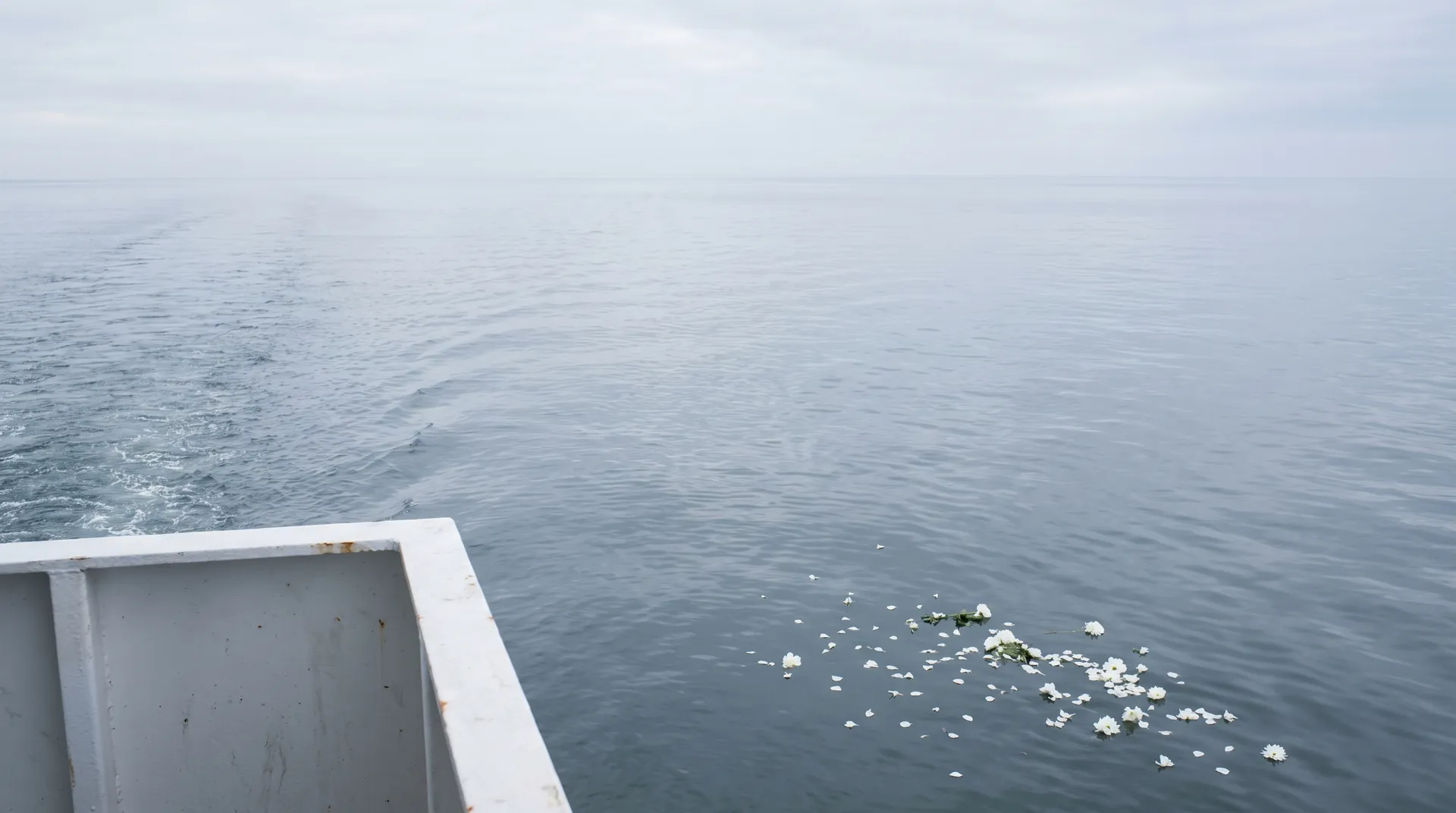
The ship sails into the designated area. The captain says a few words and the urn is committed to the sea.
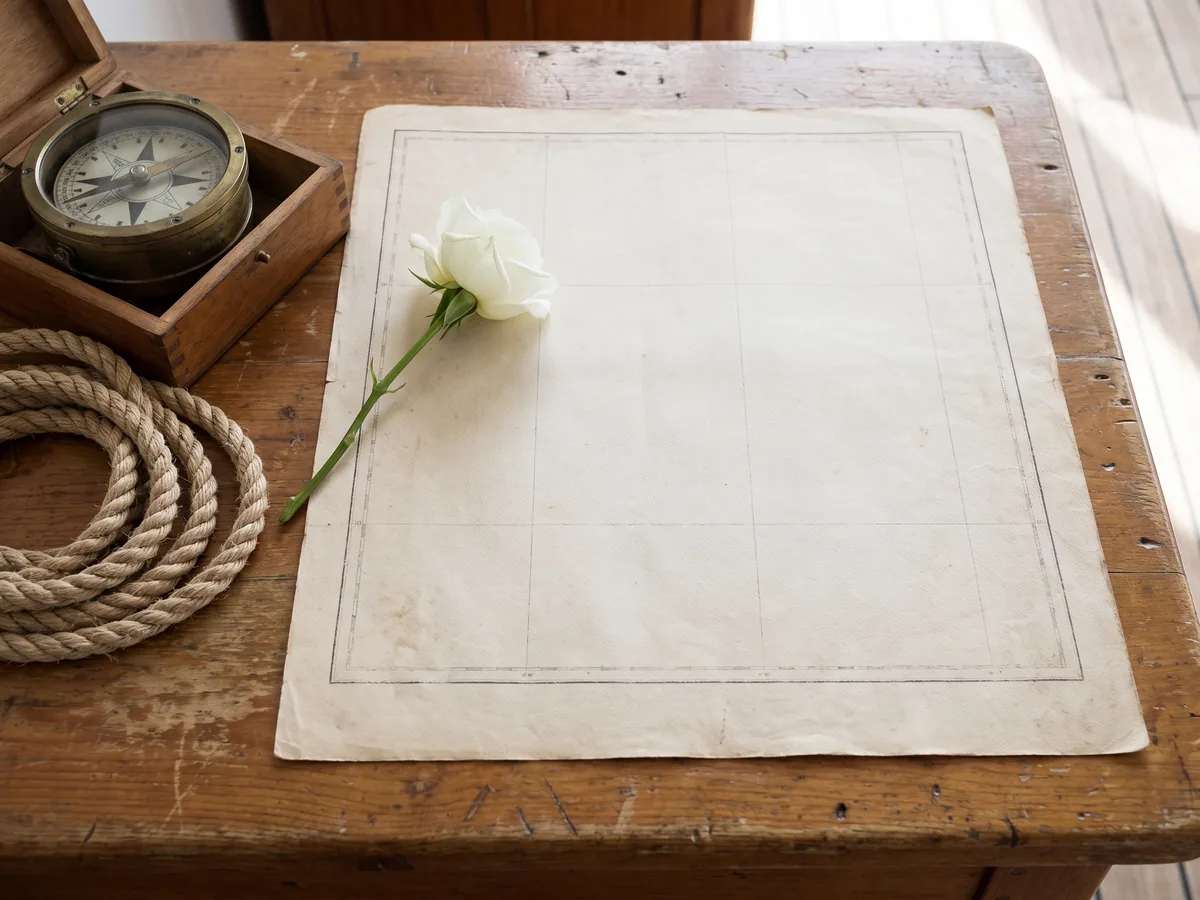
Sea chart
The position is entered in the ship’s log. The family receives a certificate with the coordinates of the site.
The sea chart as the only place
After the interment the family receives a certificate with the coordinates of the position. It takes the place of a grave — there is nothing more, and that is precisely what the family should know beforehand.
- The position is entered in the ship’s log
- A certificate with the coordinates for the family
- Some shipping companies offer memorial trips to the position
- No grave care, no cemetery fees
Good to know
What you should know
Accompanied means the family sails along; for an unattended burial the company carries it out alone
Depending on the vessel, usually up to twelve people
No plot and no stone — but no upkeep either
Wreaths, personal items and scattering the ashes are not allowed
Funeral director’s services, cremation, sea urn and the company’s voyage
As a rule a sea burial requires that the deceased wished for it or that the family can credibly show a special connection to the sea. The details are regulated differently by each federal state.
Two variants
Accompanied or unattended
Both are common — the difference is whether the family sails along.
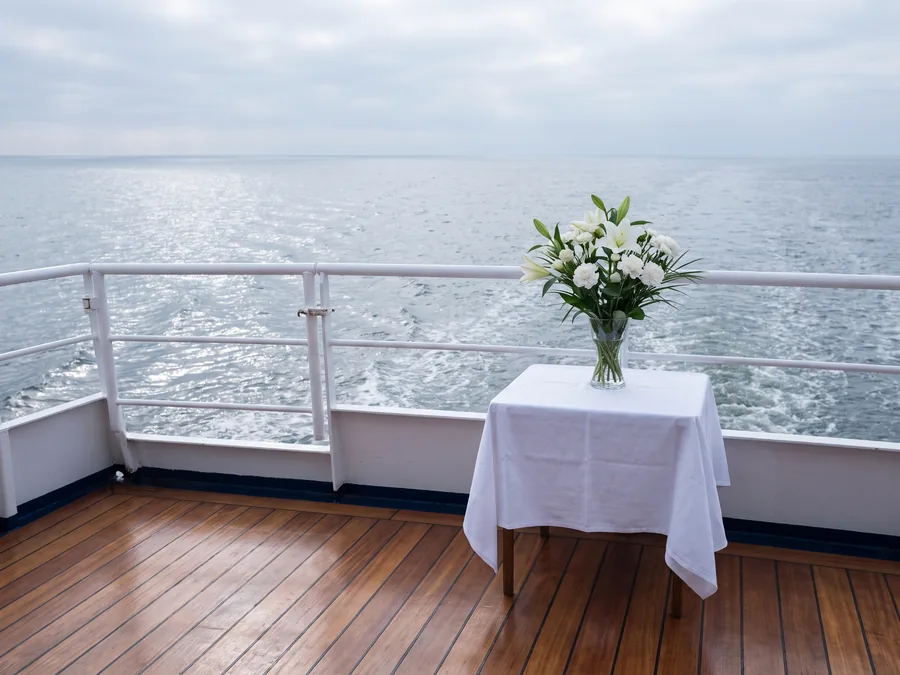
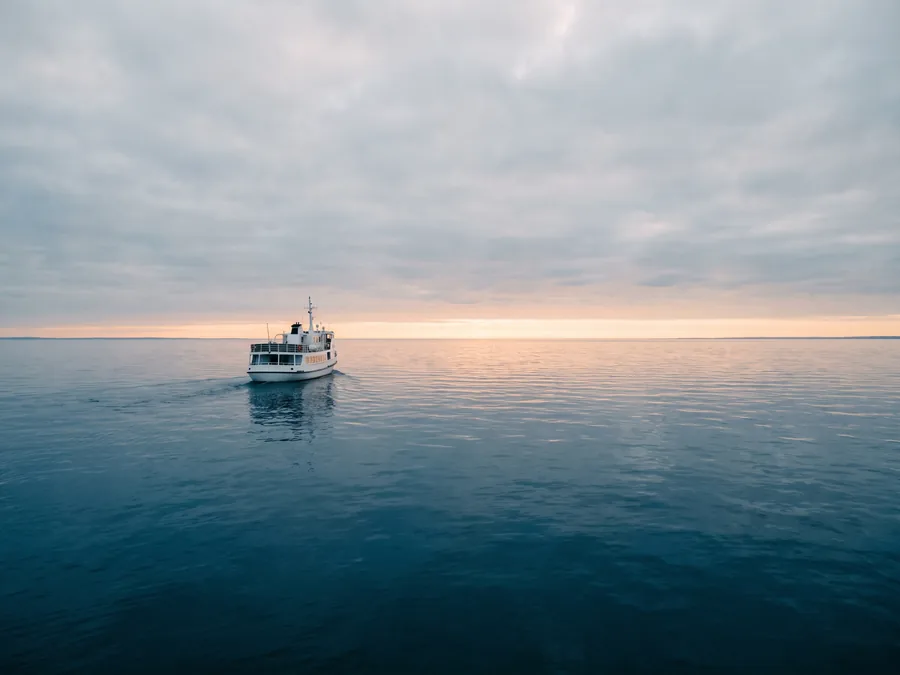
A sea burial always presupposes a cremation.
Setting it straight
Four misconceptions about sea burial
What many assume — and what actually applies.
“You can be buried at sea in a coffin.”
Not in Germany. Only ashes in a water-soluble urn may be interred. A cremation is a precondition.
“The ashes are scattered over the sea.”
No. The closed urn is committed to the water, where it dissolves. Scattering is not permitted.
“It can be done anywhere along the coast.”
Only in designated sea areas. Waters close to shore, rivers and inland lakes are excluded.
“A sea burial is always cheaper.”
Not necessarily. Cemetery fees fall away, but the cremation, the sea urn and the company’s voyage are added.
Comparison
The four burial types compared
Choose a type — the table shows what it means for the family.
Our focus
When the family lives abroad
With a sea burial there is no place the family can visit later — only the coordinates on a chart. For families spread across several countries that is often the decisive point. Anyone who wants a fixed place to grieve should consider an urn interment in the home country instead.
Frequently asked questions
What families ask us
Is a sea burial in a coffin possible?
Not in Germany. Only ashes in a water-soluble urn may be interred at sea, so a cremation is required.
Where does the interment take place?
In designated sea areas of the North or Baltic Sea, beyond the three-mile zone. Interment in rivers and inland lakes is not permitted; Rhineland-Palatinate is an exception.
Can relatives attend?
Yes, with an accompanied sea burial they sail along. With the unattended variant the shipping company carries it out alone — cheaper and often chosen when the family lives far away.
Is there a place to remember them later?
No grave, but a certificate with the coordinates. Some shipping companies offer memorial trips to the position.
What does a sea burial cost?
It is made up of the funeral director’s services, the cremation, the sea urn and the company’s voyage. Cemetery fees and grave care fall away entirely. We give you the total figure in advance.
One call is enough
The first conversation is free and non-binding. We are available around the clock — in English, German, Russian and Ukrainian.