
Burial types
Burial
The traditional interment in a coffin at a cemetery. We handle the arrangements, the paperwork and, if you wish, the repatriation abroad.
At a glance
Burial in brief
The traditional form in Germany and in most of our clients’ countries of origin.
Interment in a coffin in an earth grave at a cemetery
Usually 20 to 30 years, depending on state and cemetery
The grave remains a place of remembrance — and requires upkeep
That is how many of the deceased in Germany are still buried in a coffin — in 2019 it was one in four. North Rhine-Westphalia has the highest share at 32 per cent, Thuringia the lowest at 4 per cent.
Source: RAL-Gütegemeinschaft Feuerbestattungsanlagen e.V., 2023 survey
Process
How it works
From the death to the burial we accompany every step.
Collection and care
We collect the deceased around the clock. Hygienic care and coffining are carried out by our partners.
Formalities
Registration at the registry office, death certificates, liaison with the cemetery administration or parish.
Grave and date
We clarify the type of grave — row, selected or family grave — and agree the date of the burial.
Service and interment
On request with a chapel, music, a speaker or a member of the clergy. A viewing for a farewell is also possible.
A place that stays
An earth grave is the only option that gives the family a permanent place — with a name, to visit, to bring flowers to. That is its value and at the same time its obligation.
- Period of rest usually 20 to 30 years, extendable
- Care by the family or a cemetery gardener
- Row, selected or family grave — with different terms
- On request we arrange the grave care for you

Good to know
What you should know
In Germany the interment must take place at a cemetery
Row, selected or family grave — price and term differ
Afterwards the grave can be extended or reassigned
Funeral director’s services, coffin and the municipality’s cemetery fees
Export in a coffin requires a soldered zinc liner
Cemetery fees are set by the municipality and differ considerably. We give you the total figure before you decide.
Types of grave
Four routes to an earth grave
What is possible is determined by the cemetery’s regulations. We clarify this in advance.
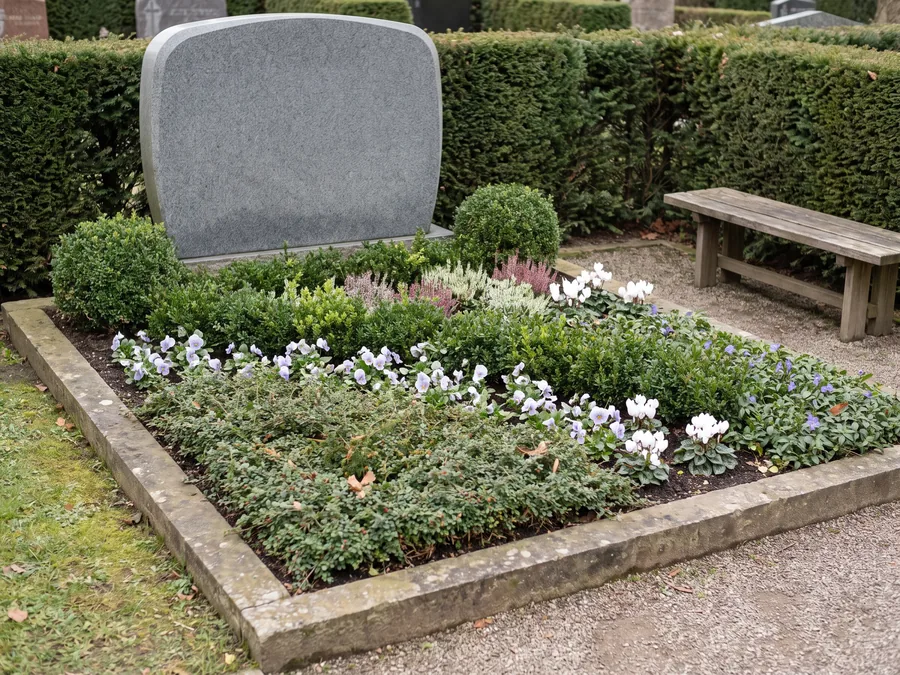
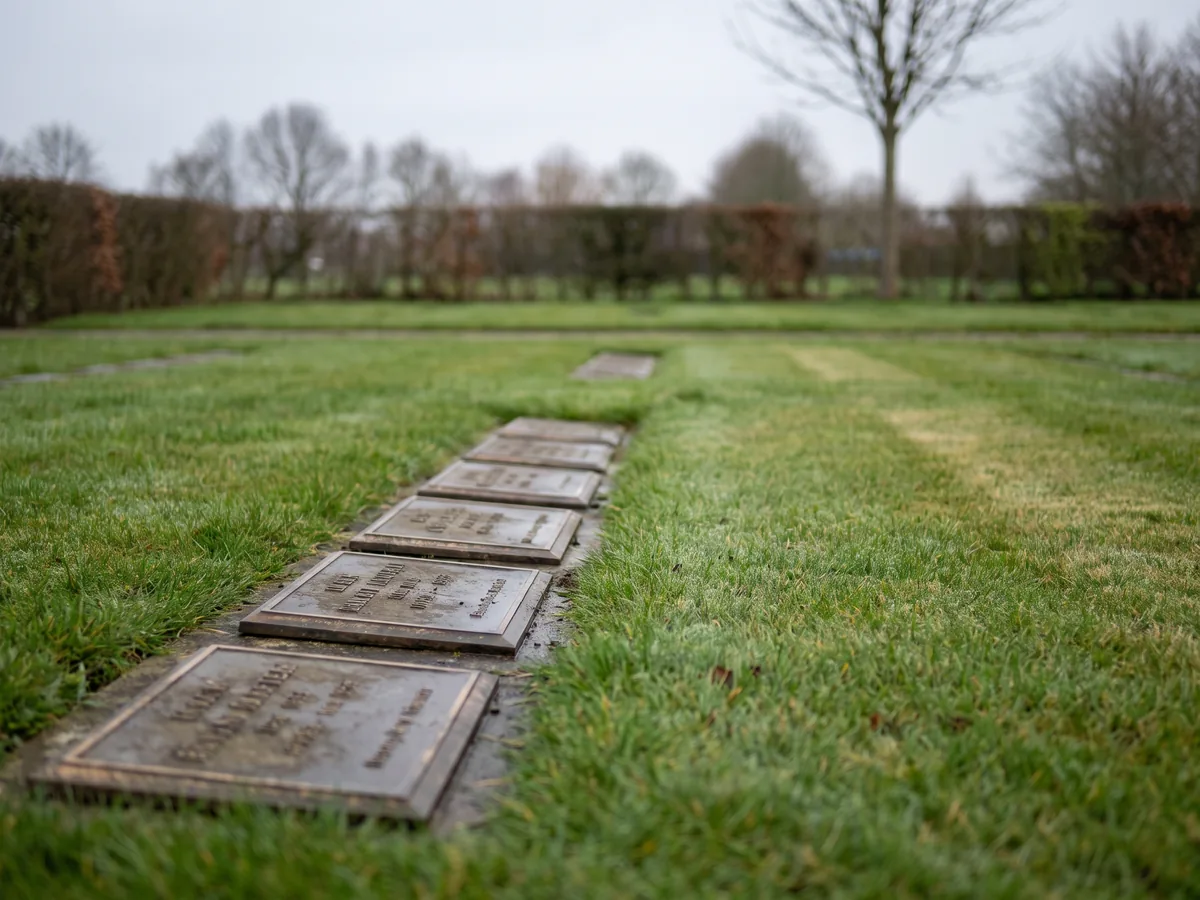
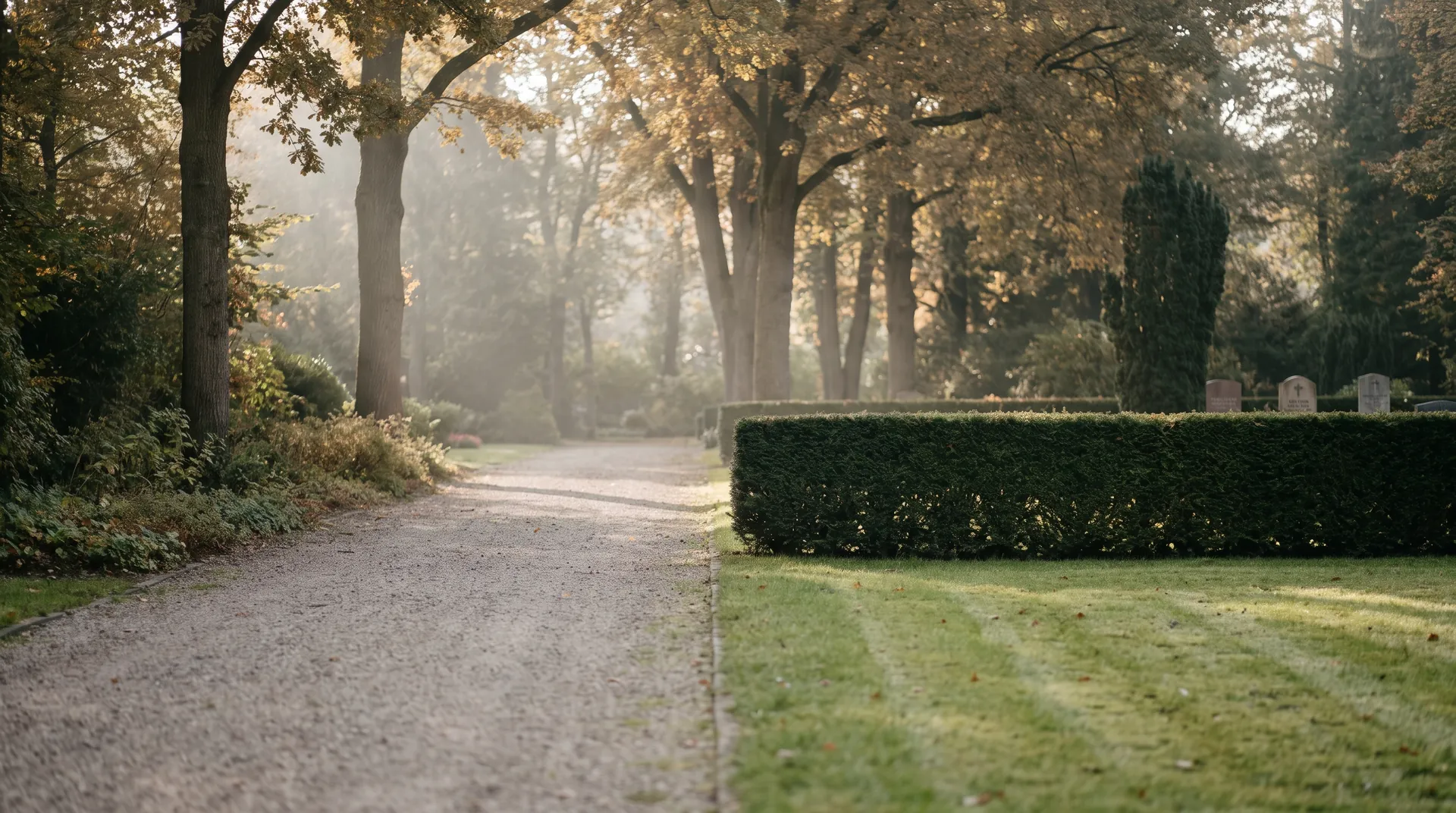
Repatriation in a coffin additionally requires a soldered zinc liner.
Setting it straight
Four misconceptions about burial
These assumptions regularly lead to unnecessary cost or disappointment.
“The grave is ours for good now.”
No. You acquire a right of use for a period, usually 20 to 30 years. After that it can be extended, or the grave is reassigned.
“A coffin grave always costs more than an urn grave.”
Usually, but not everywhere. The municipality’s cemetery fees decide — and they vary more than the price of a coffin.
“Relatives have to tend the grave themselves.”
Not necessarily. A cemetery gardener can take it on permanently — particularly when the family lives abroad.
“A burial is quicker.”
Often yes, because the second examination and a crematorium slot are not needed. For a repatriation abroad, the paperwork sets the pace.
Comparison
The four burial types compared
Choose a type — the table shows what it means for the family.
Our focus
Burial in the home country instead of Germany
If the interment is to take place in the country of origin, we repatriate the deceased there in a coffin — with all documents, consular approval and handover to the local funeral director. In many of our clients’ countries burial is in any case the only religiously permitted form.
Frequently asked questions
What families ask us
What does a burial cost?
The price consists of the funeral director’s services including the coffin and care, plus the cemetery fees. The latter differ considerably from one municipality to the next. We give you the total figure in advance.
How long does the grave remain?
The period of rest is usually 20 to 30 years, depending on the federal state and the cemetery. After that it can be extended or the grave is reassigned.
Can we say goodbye beforehand?
Yes, a viewing is possible in most cases. Where a repatriation abroad is planned, the farewell must take place before the zinc liner is soldered.
Is burial mandatory in Islam and Judaism?
Cremation is not permitted in either religion, so burial is the intended form. A prompt interment also matters — we plan accordingly.
Can the burial take place in the home country?
Yes. We repatriate the deceased in a coffin and hand them over to the funeral director on site. The family does not have to travel to Germany.
One call is enough
The first conversation is free and non-binding. We are available around the clock — in English, German, Russian and Ukrainian.