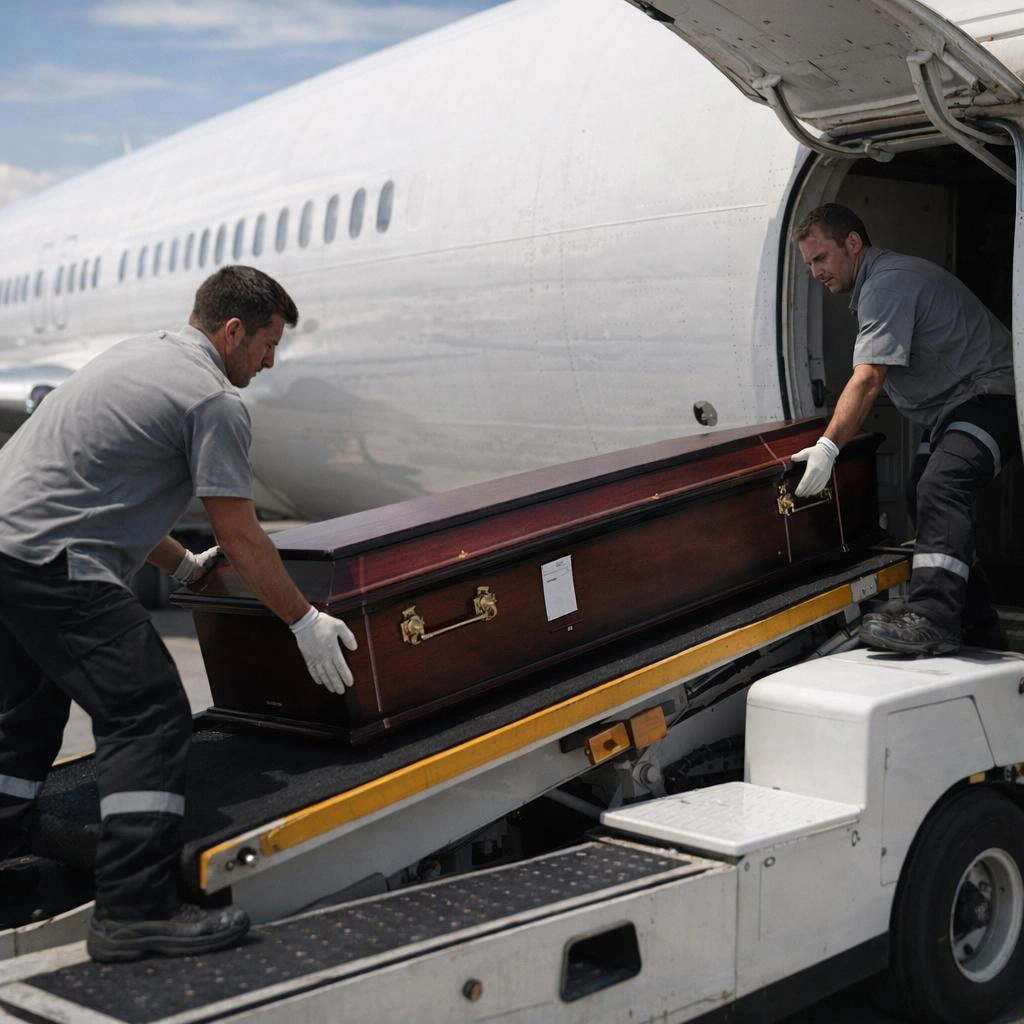

Repatriation to the CIS countries: what to bear in mind
Transporting a deceased person to a member state of the Commonwealth of Independent States involves particular legal, organisational and cultural requirements. Alongside international transport rules, consular requirements, national burial laws and sometimes regional particularities play a central part.
As a specialist in international repatriation, Ritual-Service24 accompanies families through every step — in an orderly, transparent way, with experience of the authorities and consulates of the CIS states.
Which countries make up the CIS?
Typical destination countries include:
- Russia
- Kazakhstan
- Kyrgyzstan
- Uzbekistan
- Tajikistan
- Armenia
- Azerbaijan
- Moldova
The requirements differ considerably in places, so each destination has to be checked individually.

1. Consular authorisation is mandatory
Nearly every CIS country requires consular clearance. In practice that means:
- The documents must be submitted to the relevant consulate.
- Certification or an apostille is often needed.
- Many papers have to be translated into the language of the destination country by a sworn translator.
Without these clearances the coffin cannot leave the country. Processing times vary by country and consulate.
2. Specific requirements for the coffin and preparation
Most CIS countries require:
- a hermetically sealed zinc coffin or a soldered inner casket
- official sealing by the responsible authority
- confirmation that hygiene requirements are met
These requirements derive from international transport standards and national health regulations. Improper preparation causes delays at the airport.
3. Documents for a transport to the CIS countries
Typically needed:
- An international death certificate
- A medical certificate of death
- A certificate of no objection
- The deceased’s passport
- Consular authorisation
- Freight and customs papers
Additional documents may be required depending on the country, particularly if the deceased did not hold the nationality of the destination country.
4. Transport: air freight is the norm
Because of the distances involved, transports to the CIS countries normally go by air. Several parties are involved:
- the airline’s air freight department
- the airport freight terminal
- customs authorities
- the partner funeral home in the destination country
Coordinating all this takes experience and precise timing. Ritual-Service24 handles the entire organisation, including scheduling and communication with everyone involved.
5. Religious and cultural particularities
Religious tradition is central in many CIS countries. In a Muslim context, for instance, burial deadlines are often short, while in predominantly Orthodox regions certain church procedures have to be observed.
Close coordination with the family and the partner company on the ground is therefore essential to a dignified process.
6. Timeframes and possible delays
How long a transport to a CIS country takes depends on several factors:
- the consulate’s processing time
- whether the documents are complete
- available freight capacity on flights
- public holidays in the destination country
As a rule you should reckon with several working days, occasionally up to about two weeks.
7. Bringing someone back to Germany
If a death occurs in a CIS country, Ritual-Service24 also arranges the return to Germany. In that case the coordination involves:
- the local authorities
- hospitals or funeral homes
- the German embassy or consulate
- German registry offices
Requirements differ from region to region, which makes early coordination decisive.
In short: experience is what counts
Transports to the CIS countries are administratively demanding and call for a sound knowledge of each country’s rules. An error in the documentation or the coordination can cause considerable delay.
Ritual-Service24 has experience organising international transports to the CIS region and works with dependable partners on the ground.
Our aim is to give you organisational certainty at an emotionally difficult time and to carry out a dignified transport reliably.